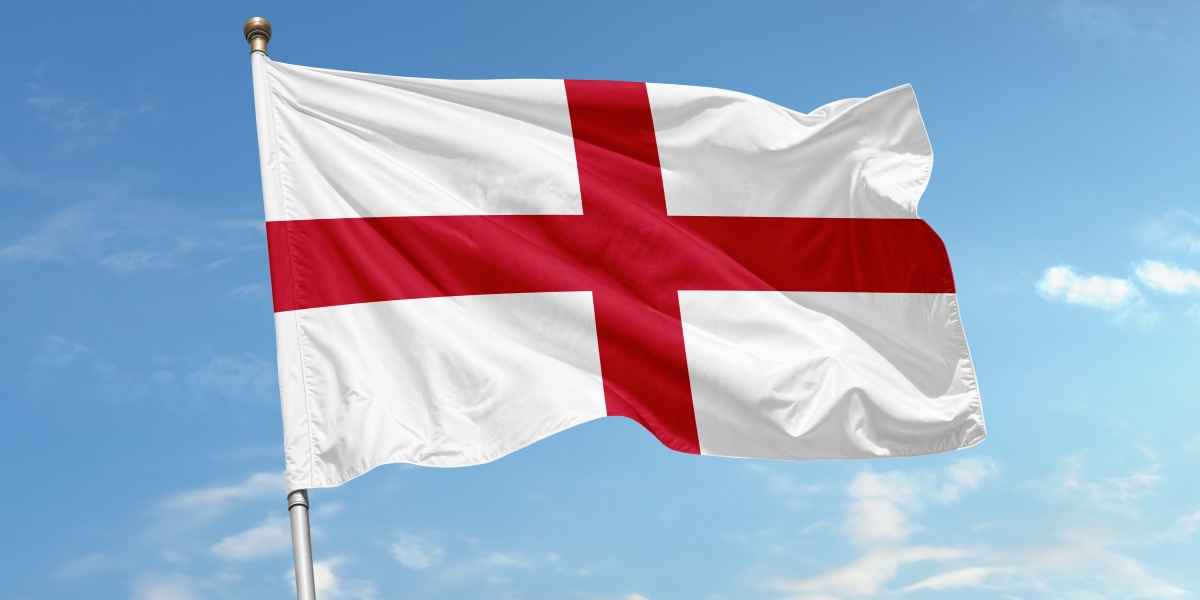
England’s World Cup campaign has revived a familiar sight across pubs, streets and stadiums: the red cross of St George on a white background.
For many supporters, it remains a simple football flag, a way of backing the national team and joining the old tournament ritual of believing, again, that it might finally be coming home.
But for others, the symbol has become far more complicated. After years of immigration rows, far-right marches and the rise of flag campaigns across England, the St George’s Cross now carries a political weight that many fans say they can no longer ignore.
According to YouGov, 52 percent of ethnic minority adults said the St George’s flag has become a racist symbol, compared with 36 percent of white adults. The same survey also found that half of the British public believed the raising of St George’s flags was mostly about expressing anti-migrant or anti-minority sentiment, rather than national pride.
Read also: Abu Dhabi United Group financed them for years
A football flag with a political shadow
The discomfort is especially visible among younger England fans, many of whom want to support the team without being mistaken for part of a political movement.
In The Times, Esme Hewitt wrote: “I see the St George’s Cross as a symbol of hate.”
Her point was not that England fans should stop supporting their team. It was that the flag has become difficult to separate from racism, anti-immigration rhetoric and figures such as Tommy Robinson for a part of her generation.
That tension has made a once-straightforward tournament symbol feel uneasy. Some fans still see the flag as a harmless expression of football pride. Others see it and think of exclusion, intimidation and the far right.
Read also: Dana White on ownership of new Las Vegas NBA Team: “YES”
Fans push back with new messages
That anxiety has also created a counter-movement among supporters who want to reclaim the flag rather than abandon it.
Described by The Independent, author and influencer Flo Finch went viral after personalising a St George’s flag with the message “For football not Farage.”
The same article also noted that “Proud not racist” flags are now being sold online, as fans search for ways to make their support for England feel more inclusive.
The message is simple: they want the flag to belong to football again, not to Nigel Farage, Reform UK, the English Defence League or any other political force that has helped reshape its public meaning.
Read also: Aymeric Laporte exposes ugly side of Pep Guardiola relationship
Raise the Colours adds to the tension
The debate has been sharpened by the rise of “Raise the Colours”, a campaign that has seen St George’s flags and Union flags placed on lampposts, bridges and other public infrastructure across parts of England.
The group says the displays are about pride and patriotism. Critics argue they have often appeared alongside anti-immigration sentiment and have made some residents feel unwelcome in their own communities.
According to The Guardian, Oxfordshire County Council sought a High Court injunction after more than 300 Union and St George’s flags were removed from lampposts at a cost of £15,000. The council said the issue was not private patriotism, but unauthorised flags on highway structures, public safety risks and harassment of workers removing them.
A later Guardian report said leaders of Raise the Colours agreed to stop putting St George’s flags on Oxfordshire council property. The injunction also banned painting flags on roads, harassing council staff involved in removals and encouraging similar actions.
Read also: Manchester City face new panel that could reopen the 115-charge verdict
Private pride or public provocation
That distinction matters. Flying an England flag from a home, wearing one at a match or taking one to a pub is not the same as attaching flags to lampposts or painting them on public roads.
But the fact that councils are now involved at all shows how far the argument has moved. What should be a football symbol has become part of a wider national dispute over identity, immigration and who gets to define Englishness.
For England fans, the timing is awkward. A World Cup normally turns the flag into a shared symbol, at least for a few weeks. This time, it has also exposed how differently people read the same piece of cloth.
Some see celebration. Others see warning.
Read also: UK Tax-service (HMRC) is coming after Manchester City now
England’s run may decide the mood
The attempt to reclaim the St George’s Cross may grow stronger if England keep winning. Tournament football has a way of softening divisions, turning pubs, streets and fan zones into temporary communities.
But the debate is unlikely to disappear completely. The flag’s meaning has been shaped by more than football, and it will take more than a few wins to change that.
For now, the slogan “Football not Farage” captures the struggle around the St George’s Cross. It is not just about whether England can reach another World Cup final. It is about whether the flag can still represent everyone who wants to cheer them on.