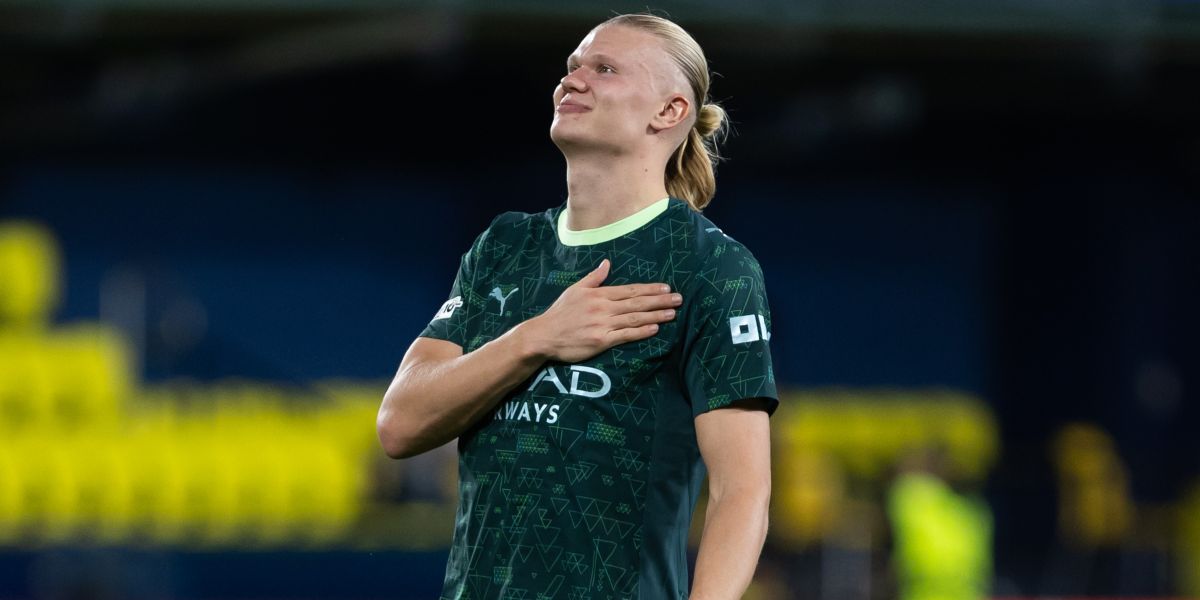
Erling Haaland’s extraordinary goalscoring ability has made him one of the defining players of the 2026 World Cup.
The Norway striker has combined explosive pace, strength and ruthless finishing to lead his country into the quarter-finals, scoring seven goals during their historic run.
Away from the pitch, Haaland follows an equally striking routine. The Manchester City forward is widely reported to consume approximately 6,000 calories a day to support his 1.95-metre frame and the physical demands of elite football.
The precise figure has not been publicly confirmed by Haaland or his nutrition team, and his intake is likely to vary depending on training, match schedules and recovery requirements.
Read also: Messi admitted he targeted one World Cup rival on purpose
However, the foods he prioritises and his broader approach to health have been documented in interviews, documentaries and videos published by the striker himself.
Organ meat and locally sourced food
According to Cayle Reid’s account for Men’s Health Australia, Haaland’s reported diet is built around whole foods, with beef, fish, eggs, milk, honey and vegetables among the regular ingredients.
Some of his choices are less conventional.
Haaland has openly discussed eating beef heart and liver, foods that contain protein and several important vitamins and minerals.
Read also: Cristiano Ronaldo crisis forces Portugal chief into emergency action
“I think eating quality food that is as local as possible is the most important thing,” Haaland said in footage from his documentary, Erling Haaland: The Big Decision.
“People say that meat is bad, but which one? The meat you get at McDonald’s? Or the local cow eating grass right over there? I eat the heart and liver.”
The striker is also known to favour fatty cuts of meat, including ribeye and tomahawk steak, while fresh fish and homemade meals remain important parts of his diet.
His father, former Manchester City and Leeds United midfielder Alfie Haaland, has previously prepared lasagne for him before matches.
Read also: Harry Kane breaks silence on Man City verdict
Despite his disciplined routine, Haaland has made clear that he does not avoid indulgent food completely. Kebab pizza remains one of his favourite meals, although he has said he eats it only occasionally when returning to his hometown of Bryne.
Six meals to maintain his powerful frame
Reports surrounding Haaland’s routine suggest that his estimated 6,000 calories are divided across as many as six meals.
Breakfast may include eggs, sourdough bread, raw honey and coffee with milk. Other meals reportedly feature chicken, pasta, rice, fish, vegetables and large servings of meat.
Former Norway teammate Joshua King previously described Haaland as someone who “eats like a bear”, a reflection of the amount required to maintain his size and workload.
Read also: Phil Taylor comes out of retirement for stunning darts return
However, the figure should not be viewed as a recommended target for the average person.
Haaland is a 1.95-metre professional athlete whose working day can include football training, strength work, rehabilitation sessions and matches involving repeated high-intensity sprints.
His nutritional needs are therefore significantly different from those of most adults.
Rather than the calorie total alone, Haaland has repeatedly placed greater emphasis on the quality of his food and the consistency of his routine.
Read also: ‘If you lie to me, I will leave’: Guardiola’s City warning takes on new weight
Sleep treated as seriously as training
Nutrition is only one part of Haaland’s approach.
The Norwegian places considerable importance on sleep and recovery, describing rest as one of the most important elements of his performance.
He reportedly avoids electronic screens before bed and has used glasses designed to limit exposure to blue light during the evening.
Haaland has also spoken about covering his mouth with tape while sleeping to encourage nasal breathing, although such practices may not be appropriate for everyone and should not be copied without medical advice.
His mornings often begin with exposure to natural light and a short walk, habits intended to support a regular sleep schedule.
“The first thing I do in the morning is get some sunlight in my eyes,” he said. “It is good for the circadian rhythm.”
Recovery sessions can also include stretching, physiotherapy, sauna visits, ice baths and red-light therapy.
For Haaland, these routines are not separate from his football career. They are part of the work required to remain available and perform throughout a demanding season.
“You have to be a 24-hour athlete,” he has said. “It is not only about the two hours when you play.”
Haaland writes Norwegian World Cup history
Haaland’s methods have attracted renewed attention because of his performances in North America.
The striker scored twice as Norway defeated Brazil 2-1 in the round of 16, securing the country’s first appearance in a World Cup quarter-final.
As described by Joe Yates in UNILAD’s ranking of the tournament’s 48 teams, those goals also made Haaland Norway’s leading scorer in World Cup history.
He entered the quarter-final against England with seven goals from four appearances, having scored in every match he played during the tournament.
Haaland’s goals cannot be attributed to one food, supplement or recovery technique. Genetics, coaching, training and technical ability all contribute to his extraordinary record.
Yet his disciplined life away from the pitch offers an insight into the level of preparation required to sustain his power and goalscoring output.
The reported 6,000 calories may provide the eye-catching headline, but the wider story is one of consistency. Haaland appears to treat eating, sleeping and recovery with the same seriousness as finishing chances in front of goal.