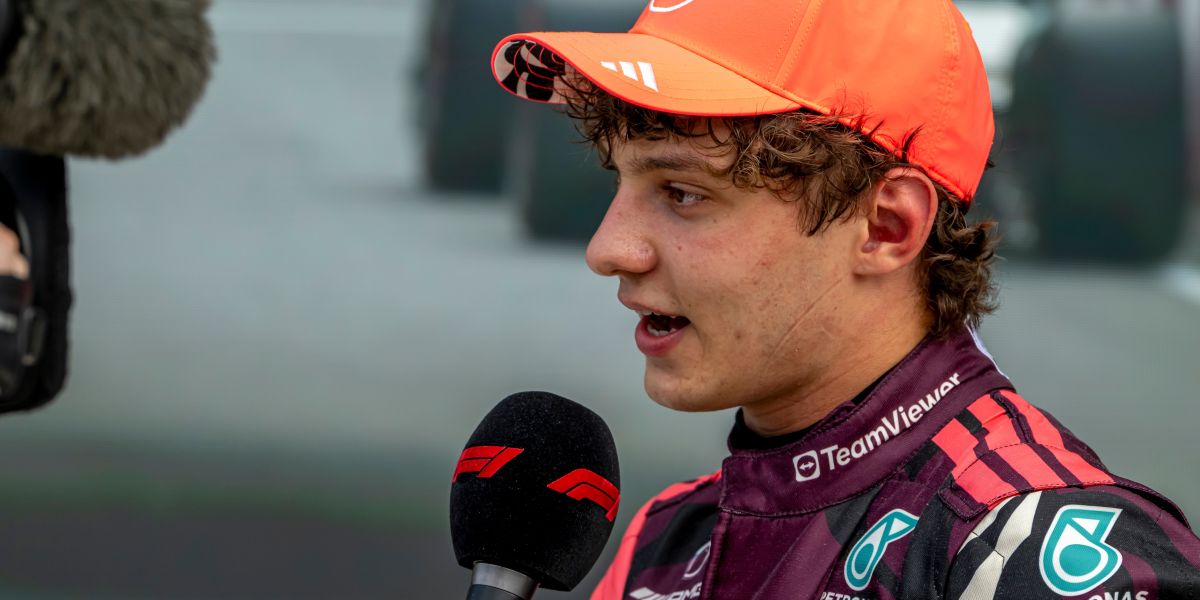
The 19-year-old rookie was on track to secure a commendable second-place finish until a sudden mechanical failure ended his race just five laps from the checkered flag.
The retirement at Turn 5 was attributed to a suspected battery malfunction, a recurring problem that has disrupted multiple Mercedes-backed entries throughout the 2026 season. The DNF proved costly for Antonelli, shaving 25 points off his championship lead following Lewis Hamilton’s maiden victory for Ferrari.
A systemic issue for Mercedes power units
The failure in Spain marks the third high-profile battery issue for a Mercedes-powered car this season, raising questions for the manufacturer’s High Performance Powertrains division. Similar electronics failures have struck other top drivers under the Mercedes umbrella:
- George Russell retired with an identical battery shutdown in Canada.
- Lando Norris suffered a battery failure in Monaco, alongside a separate gearbox issue in Montreal.
- McLaren suffered a double blow in China, where both Norris and Oscar Piastri failed to start due to distinct engine anomalies.
Mercedes team principal and CEO Toto Wolff acknowledged the worrying pattern. Quoted by PlanetF1 in their report Mercedes reliability concerns grow after latest power unit failure, Wolff noted that while the symptoms are identical, the root causes may differ.
Read also: World Cup blow confirmed as Ghana lose one of their biggest stars
“We don’t know yet what was the cause of the failure,” Wolff explained. “Most of the others were battery-related, but different failures. It was not always the same, so we need to understand what it was, but clearly the symptom was quite similar, that the car, like George in Montreal, where the car just switched off. We will be really digging deep to make sure that this doesn’t happen again.”
Antonelli reflects on sudden shutdown
Despite the heartbreak of losing a podium so close to the finish line, Antonelli remained pragmatic about the premature end to his afternoon, explaining that the vehicle offered no prior warning before completely dying.
“I think it was something related with the battery, I’m not too sure, but it just switched off,” Antonelli stated after the race. “I didn’t have any warnings, the car just switched off and I tried to reboot the car completely, because I was hoping it would come alive again, but there was no chance, and it was a terminal failure. It happens, part of racing, but at least pace was good today, I think, and now we’ll focus into the next one.”
With the stringent 2026 engine regulations placing a premium on power unit durability, these persistent electrical flaws have emerged as a significant vulnerability for an otherwise competitive Mercedes package. Wolff has reaffirmed that the engineering team is fully committed to rectifying the glitches to ensure stable performance across all customer and works teams moving forward.
Read also: Why VAR refused to award France a penalty against Senegal
Read also: Kane has a clear message to his teammates ahead of Croatia showdown