Anfield refused to let him speak
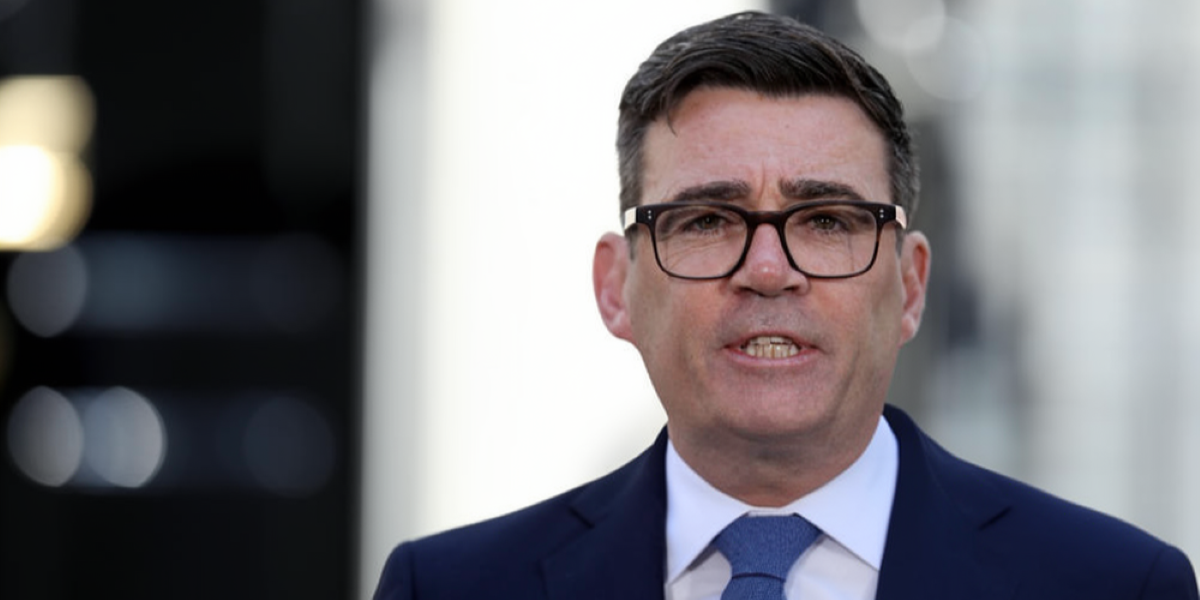
There are few moments in British politics quite like the one Andy Burnham experienced at Anfield on April 15, 2009.
Around 30,000 people had gathered at Liverpool’s stadium to mark 20 years since the Hillsborough disaster. Burnham was not yet the man occupying 10 Downing Street. He was Gordon Brown’s Culture Secretary, responsible for sport, and had come to Liverpool representing a government many of those inside the stadium believed had failed to deliver the truth.
Initially, Burnham was applauded as he remembered the supporters who had died. Then he began speaking on behalf of the Prime Minister.
The atmosphere changed.
Read also: Manchester United told to ‘nick’ two Man City stars if relegation hits
According to The Guardian’s report from the memorial, sections of the crowd began heckling and booing. Then came the words that would follow Burnham for years.
“Justice for the 96.”
The chant spread through the stadium. A later Guardian account described it as continuing for around two minutes before Burnham could properly continue.
For a senior government minister, it could have been remembered as a humiliating encounter with an angry football crowd.
Read also: Thierry Henry issues blunt warning over Liverpool’s £123m signing
Instead, Burnham later claimed it changed the direction of his political life.
The disaster was already deeply personal
There was another reason Hillsborough affected Burnham differently from many politicians in Westminster.
He had been remarkably close to the story from the beginning.
Burnham is an Everton supporter. On April 15, 1989, the then 19-year-old was not at Hillsborough, but at Villa Park with his father and two brothers watching Everton play Norwich City in the other FA Cup semi-final.
Read also: Roy Keane goes nuclear on Man City after 114 guilty findings
Everton won 1-0.
Burnham would later write in The Independent that he remembered almost nothing about the victory. What stayed with him was something displayed on Villa Park’s scoreboard while the game was being played.
“5 dead at Hillsborough.”
The number would rise catastrophically.
Read also: Here is Foden’s Man City exit route
Burnham and his family drove north listening to reports from Sheffield on the radio. That evening, he met friends who had been at Hillsborough and listened to their accounts of the crush.
Even more strikingly, Burnham revealed that he himself had stood in the Leppings Lane end only a year earlier, during an Everton game at Hillsborough in January 1988. He remembered being so tightly packed that his feet were lifted from the ground and being frightened for his younger brother.
The tragedy that would eventually become one of the defining political causes of his career was therefore never simply an abstract Westminster issue.
It came from football grounds he knew, supporters he knew and communities in which the rivalry between Liverpool and Everton mattered far less than the catastrophe that had struck Merseyside.
Read also: Rodri breaks silence on Man City verdict with remarkable 2020 comparison
A football crowd forced Westminster to listen
For years, Hillsborough families and survivors fought against a narrative that had placed blame on Liverpool supporters.
The later Hillsborough Independent Panel concluded that Liverpool supporters were not responsible for the disaster and reaffirmed Lord Justice Taylor’s finding that the principal cause was a failure of police control.
The scale of what subsequently emerged was extraordinary.
When the findings were discussed in Parliament in 2012, MPs were told that 164 police statements had been significantly altered, with 116 changed to remove or modify material that was unfavourable to the policing operation.
But one of the moments that helped restart the political process came three years earlier, inside a football stadium.
The official Hillsborough Independent Panel account records what happened after Burnham was interrupted at Anfield in 2009. More than 30,000 people were present, a single shout of “Justice” grew into a stadium-wide chant, and after returning to Westminster Burnham began discussions inside government about a fresh examination of Hillsborough.
Those discussions eventually contributed to the creation of the Hillsborough Independent Panel.
It is an extraordinary example of supporters inside a stadium directly altering the course of British politics.
Five years later, everything had changed
Burnham returned to Anfield for the 25th anniversary memorial in 2014.
This time, the reception was almost unrecognisable.
Where he had once faced anger, Burnham was now greeted warmly. A banner on the Kop read: “Thank You Andy Burnham.”
He acknowledged the transformation himself.
According to The Guardian, Burnham said the hostile reception five years earlier had helped him “find the political courage to do something”.
It is an important distinction in the story.
Burnham did not create the Hillsborough campaign. The families, survivors and campaigners had already fought for years while much of the political establishment failed to respond adequately.
Burnham has repeatedly made that point himself.
But the supporters did appear to change him.
Looking back at the 2009 moment during his 2014 speech, Burnham said the crowd had managed to carry its message from the Kop into homes across Britain and eventually into “the heart of the establishment”.
For a politician who would later build much of his national identity around the idea that Westminster had become too detached from ordinary communities, Anfield became an unusually powerful origin story.
Then came the law
Burnham’s connection with Hillsborough did not end with the independent panel.
Shortly before leaving Westminster to become Mayor of Greater Manchester in 2017, he introduced a private member’s bill seeking a legal duty of candour for public officials. That attempt disappeared when Theresa May called a general election.
Years later, the idea returned.
The Public Office (Accountability) Bill, widely known as the Hillsborough Law, was introduced by Keir Starmer’s government in September 2025. It is designed to make it far harder for public bodies to conceal wrongdoing following disasters and other serious incidents.
Among the measures are a statutory duty of candour and assistance for public officials dealing with inquiries and inquests, new criminal offences connected to misleading the public, and expanded access to publicly funded legal representation for bereaved families facing state bodies.
Its significance extends far beyond football.
The legislation is intended to address one of the most disturbing lessons of Hillsborough: the enormous imbalance of power that can exist when ordinary families are forced to challenge institutions with vastly greater legal, political and financial resources.
Burnham called it a “rewiring of the state”
Then came perhaps the most remarkable full-circle moment of all.
On July 14, 2026, days before he was due to replace Keir Starmer as Prime Minister, Burnham returned to the House of Commons and spoke during the debate as MPs approved the bill before sending it to the Lords.
He had returned to Westminster after years as Mayor of Greater Manchester. Now he was preparing to take control of the country.
“It does feel tonight like life is coming full circle,” Burnham told MPs.
He described the legislation as “truly a rewiring of the state”.
According to The Guardian’s account of the debate, Burnham argued that people who lose loved ones in disasters can then be traumatised a second time by the conduct of state institutions.
The symbolism was difficult to miss.
In 2009 he had stood in front of the Kop as a representative of the British government and been confronted by people who believed the state had failed them.
In 2026, he stood in Parliament supporting legislation designed to change how that same state behaves when disaster strikes.
Today the fight reaches the House of Lords
And that is why September 1 matters.
Burnham became Prime Minister on July 20, according to the official UK government record. Less than two months later, the Public Office (Accountability) Bill is scheduled for its second reading in the House of Lords today.
The bill has already completed its Commons stages but is not yet law.
That distinction matters.
After years of political promises, delays and arguments over how the proposed duty of candour should apply to the intelligence and security services, the legislation still has parliamentary hurdles to clear. The Lords can scrutinise and seek amendments before the bill can ultimately receive Royal Assent.
For Burnham, however, it creates an extraordinary scene.
On the same day he faces MPs at Westminster for the first major parliamentary appearance of his premiership, another chamber of Parliament is considering legislation inseparably linked to the football tragedy that helped shape his political career.
Seventeen years ago, the pressure came from the Kop.
Now Burnham sits in Downing Street.
The 97 remain at the centre of the story
There is one final detail that illustrates just how much time has passed.
In 2009, the chant Burnham heard was “Justice for the 96”.
Today, Hillsborough’s death toll stands at 97.
Andrew Devine suffered catastrophic injuries in the 1989 crush and lived for another 32 years before dying in 2021. A coroner subsequently ruled that his death resulted from the injuries he sustained at Hillsborough and formally recognised him as the disaster’s 97th victim.
That is why the Burnham story ultimately cannot simply be told as the tale of a politician who survived a hostile reception and eventually became Prime Minister.
The more remarkable story belongs to the families and supporters who refused to stop demanding answers.
Their voices followed Burnham out of Anfield, through Westminster, into the creation of the Hillsborough Independent Panel, through years of inquiries and political battles, and eventually towards legislation intended to change how the British state responds when its own institutions are accused of failure.
The future Prime Minister happened to be standing in front of them when they made themselves impossible to ignore.
And according to Burnham himself, he never forgot it.