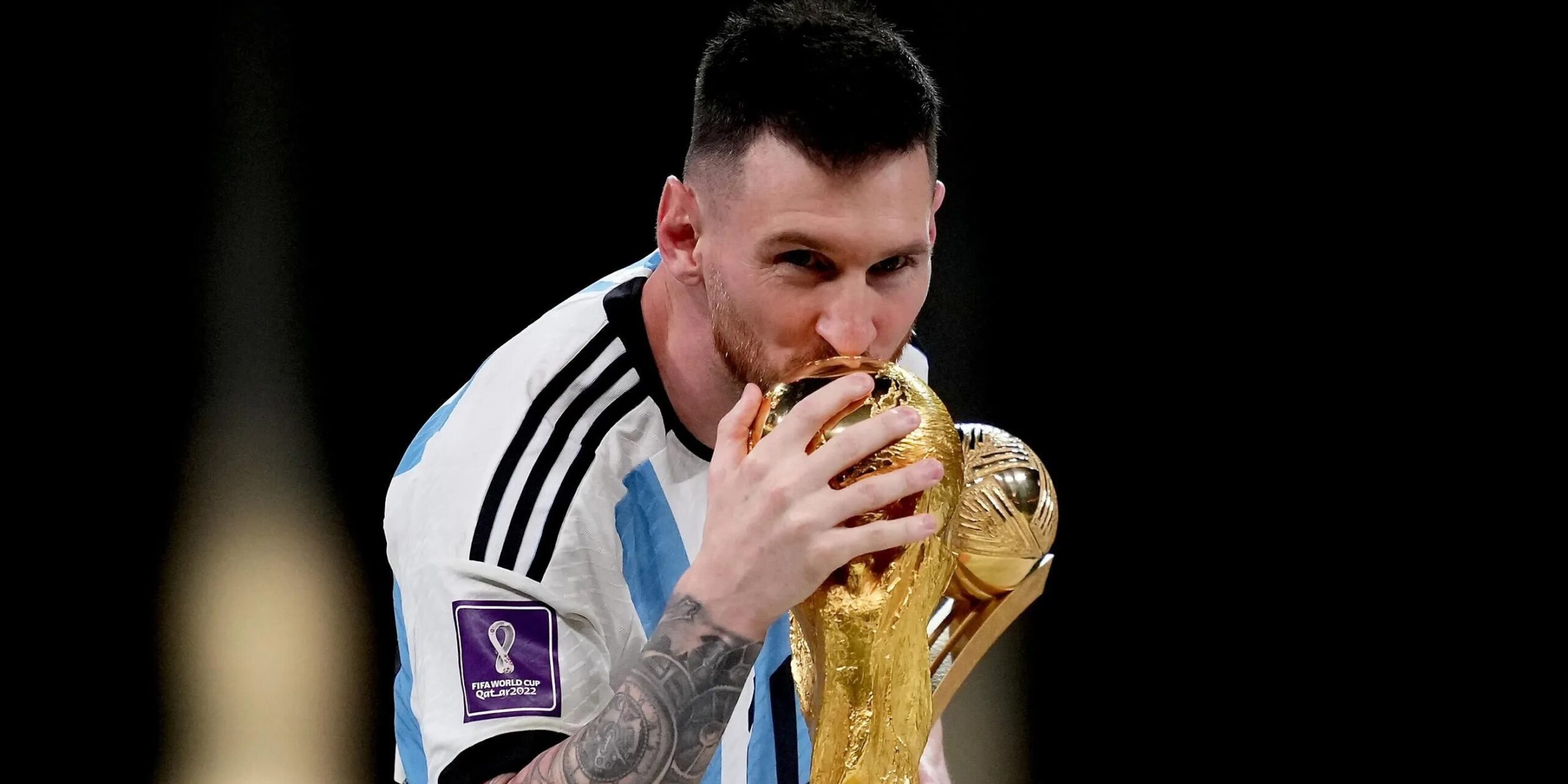
Kylian Mbappe’s hat-trick in the 2022 FIFA World Cup final, though ultimately in a losing effort for France, saw him claim the coveted Golden Boot trophy. As attention turns to the 2026 tournament, the race for the top scorer’s award is already generating significant discussion, with historical trends offering insights into potential frontrunners and dark horses.
History suggests that age plays a crucial role in Golden Boot success. On average, winners are 24.7 years old, with Mbappe himself being 24 when he won in 2022. Only once has a player aged 30 or above claimed the prize: Davor Suker, who scored six goals for Croatia at France ’98 as his nation secured third place in their debut World Cup. This trend poses a significant challenge for seasoned stars like Lionel Messi, who will be 38 in 2026, and Cristiano Ronaldo, set to be 41. Even Harry Kane, a strong contender who scored six times at Russia 2018, will be 32 by the next tournament.
Beyond age, a player’s form leading into the tournament and their team’s progression are vital. Thomas Muller, the 2010 Golden Boot winner, reflected on his success, stating, “I basically got lucky, I hit form at just the right time.” Muller had a stellar 2009-10 Bundesliga season, scoring 13 goals and providing 11 assists for Bayern Munich. This highlights the importance of arriving in peak condition after a successful club campaign.
The anatomy of a Golden Boot winner
BBC Sport’s analysis of Golden Boot winners reveals several key characteristics:
Read also: Kylian Mbappe had just hit top form – now Real Madrid have a problem
Age: Average age of winners is 24.7 years old. Florian Albert of Hungary remains the youngest winner, aged 20 years and eight months in 1962.
Team success: A deep run in the tournament is generally crucial. Only twice has a player from a club outside their domestic top four finished as the World Cup’s top scorer. Oleg Salenko’s six goals at USA ’94, including five in a 6-1 thrashing of Cameroon, came despite Russia’s group stage exit.
No repeat winners: No player has ever won the World Cup Golden Boot more than once, presenting a unique challenge for Mbappe.
Tie-breakers: If players are tied on goals, FIFA awards the Golden Boot based on assists, and then on the fewest minutes played. This rule was decisive in 2010 when Thomas Muller’s three assists saw him edge out Diego Forlan, David Villa, and Wesley Sneijder, who also scored five goals.
Read also: Premier League boss breaks silence with damning Manchester City statement
Contenders for 2026
While Kylian Mbappe scored four goals in World Cup qualifying, the historical hurdle of no repeat winners looms large. Harry Kane, who scored 54 goals for his club this season, remains a prolific threat despite his age. Erling Haaland, with 26 league goals for Manchester City and an impressive 16 goals in eight qualifying games for Norway, is a strong candidate, provided his national team qualifies and progresses deep into the competition.
Brazil, with six previous Golden Boot winners including Leonidas in 1938 and Ronaldo in 2002, could look to Vinicius Junior. The 25-year-old scored 21 goals and assisted 14 times for Real Madrid this season, though Brazil’s fifth-place finish in Conmebol qualifying suggests a challenging path. Spain’s Lamine Yamal, who turns 19 just a week before the 2026 final, represents a youthful prospect, but Spain has not progressed beyond the round of 16 since their 2010 triumph. Other players showing strong club form include Lautaro Martinez, who won the Copa America 2024 Golden Boot with five goals, Ousmane Dembele with 19 goals for Paris St-Germain, and Michael Olise, who scored 22 goals and provided 30 assists for Bayern.
Sources: www.bbc.com
Read also: Kasper Schmeichel finds completely new path after football retirement