Dallas Stadium is poised to host a compelling Round of 32 encounter at the 2026 World Cup on Tuesday, June 30, 2026, as Ivory Coast, making their first-ever appearance in the knockout stages, face a Norway side returning to the global showpiece after a 28-year absence. The stakes are immense for both nations, with the Opta supercomputer favouring Norway to win inside 90 minutes at 56.1%.
Ivory Coast, the runners-up of Group E, have defied expectations to reach this stage in their fourth World Cup appearance. Emerse Faé’s side displayed remarkable resilience and attacking prowess throughout the group stage, winning multiple games at a World Cup for the first time. Their only defeat came in a late 2-1 loss to Group E winners Germany. Crucially, the Elephants scored the opening goal in all three of their group games – a feat only surpassed by Nigeria among African nations in 1994, who managed four. This attacking initiative saw them trail for a mere three minutes and 29 seconds across their entire group campaign.
Ivorian stars make their mark
The Ivorian charge has been spearheaded by standout individual performances. Nicolas Pépé netted his side’s quickest World Cup goal, timed at six minutes and four seconds, and became only the second Ivorian to score a brace at the finals – 20 years after Aruna Dindane achieved the feat against Serbia. At 31 years and 27 days, Pépé also became the second-oldest African to score twice in a World Cup match, trailing only Cameroon’s legendary Roger Milla (38 years, 34 days) in 1990.
Midfielder Yan Diomande has also been a revelation, becoming just the second African player to complete 10+ dribbles (10) and create 10+ chances (10) in a single World Cup group stage, following South Africa’s Quinton Fortune in 2002. His creativity and drive have been pivotal, making him the first player since Roberto Donadoni and Dragan Stojković in 1990 to achieve such statistics across his opening three appearances at the finals.
Read also: Where Erling Haaland could end up if he leaves Man City
Haaland’s historic chase and Norway’s return
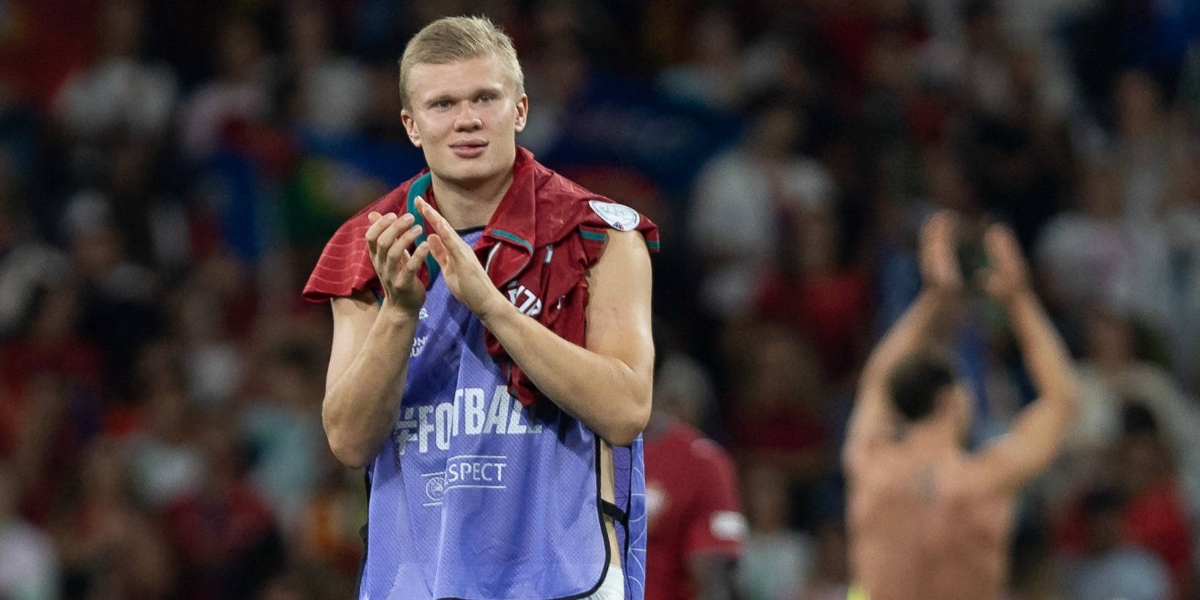
Norway, who finished as runners-up in Group I, enter this clash with their own ambitions and a formidable attacking threat in Erling Haaland. The prolific striker has already scored four goals in his first two World Cup appearances, securing victories over Iraq (4-1) and Senegal (3-2). Should Haaland find the net against Ivory Coast, he would become the first player since Hungary’s Sándor Kocsis in 1954 to score in each of his first three World Cup matches.
Manager Ståle Solbakken notably rested Haaland and made 10 or more changes for their final group game against France, a match they lost 4-1 with current Ballon d’Or holder Ousmane Dembélé scoring a hat-trick. This defeat was only Norway’s second in 19 matches in all competitions (W14 D3) and the first time they had conceded more than two goals in a major tournament match. Solbakken is expected to revert to the side that defeated Senegal, with key players like Martin Ødegaard and Alexander Sørloth returning to the starting XI.
This will be Norway’s third-ever knockout match at the finals, having lost their previous two encounters against Italy in 1938 (2-1) and 1998 (1-0). Solbakken’s side has not lost successive matches since September 2022, when they were beaten by Slovenia and Serbia in the Nations League. For Ivory Coast, history is also a factor; only two African nations have ever won their first World Cup knockout game: Cameroon against Colombia in 1990 and Senegal against Sweden in 2002. The winner of this intriguing fixture could potentially face five-time champions Brazil in the quarter-finals, should they overcome Japan.
Read also: Javier Tebas breaks silence on what should happen to Man City next