DBU asks FIFA for clarity
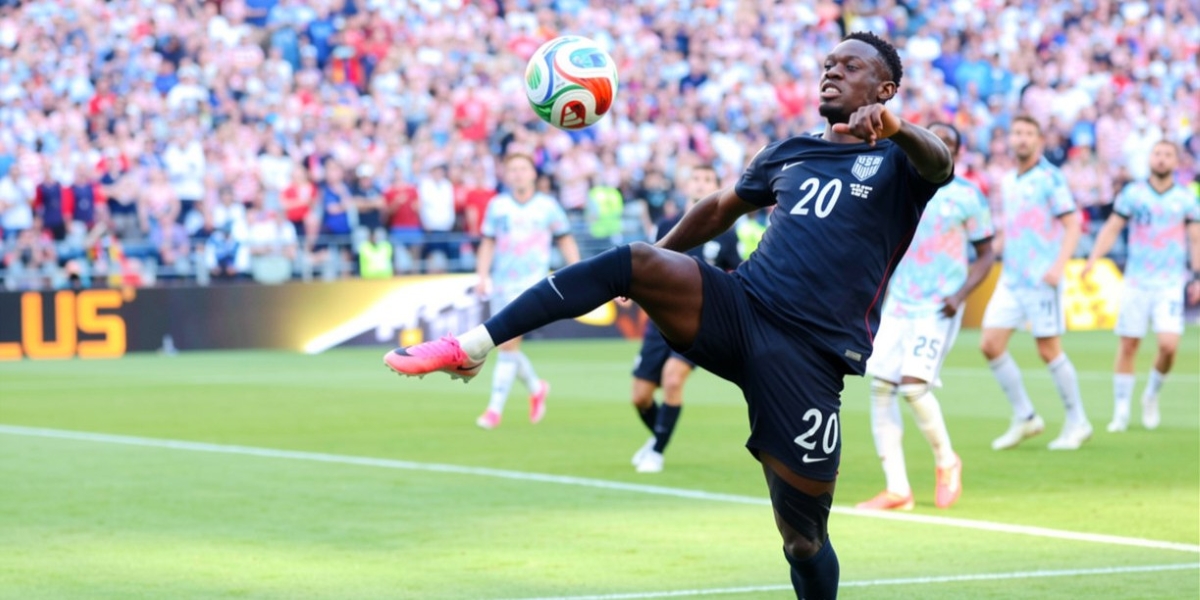
The Danish Football Union is pressing FIFA for a fuller explanation after Folarin Balogun was allowed to play for the United States against Belgium despite being sent off in the previous round.
Balogun received a straight red card during the United States’ 2-0 win over Bosnia and Herzegovina in the World Cup round of 32. The dismissal normally carried an automatic one-match suspension, which would have ruled him out of the last-16 tie against Belgium.
Instead, FIFA suspended the implementation of the ban for a one-year probationary period, allowing the Monaco striker to start in Seattle.
According to TV 2 Sport, DBU director Erik Brøgger Rasmussen says the Danish federation, together with several European federations, will ask FIFA for a more detailed explanation of the decision.
Read also: Harry Kane breaks silence on Man City verdict
“Rules must be equal for all”
The Danish concern is not only about Balogun or the United States.
It is about consistency.
“We continue to wonder why FIFA deviates from previous practice in enforcing disciplinary rules,” Brøgger Rasmussen said. “Rules must be consistent and equal for all to ensure and protect the integrity of the sport.”
The statement reflects a wider frustration in European football after one of the most unusual disciplinary decisions of the tournament.
Read also: Phil Taylor comes out of retirement for stunning darts return
According to The Guardian, UEFA described FIFA’s decision as “unprecedented, incomprehensible and unjustifiable” and said the governing body had crossed “a red line”.
FIFA points to Article 27
FIFA’s explanation rests on its disciplinary code.
The organisation has insisted that Balogun’s red card itself was not erased. Instead, the automatic one-match punishment attached to it was suspended.
According to the FIFA Disciplinary Code, Article 27 allows a judicial body to fully or partially suspend the implementation of a disciplinary measure and place the sanctioned person under a probationary period.
Read also: ‘If you lie to me, I will leave’: Guardiola’s City warning takes on new weight
That is the legal route FIFA says was used in Balogun’s case.
But the DBU and other European federations want to know why that option was used here, and what specific criteria made the case exceptional enough to depart from the normal enforcement of a red-card suspension.
Trump call adds pressure
The controversy has been intensified by Donald Trump’s involvement.
According to AP, the U.S. president confirmed that he called FIFA president Gianni Infantino and asked for the red card decision to be reviewed.
Read also: Harry Kane’s Bayern future suddenly comes with a Tottenham escape route
Infantino has said the matter was already before FIFA’s independent judicial bodies and that the decision was taken by the relevant disciplinary authorities.
That means FIFA and Infantino are publicly aligned. The organisation is not suggesting that Infantino personally overturned the ban, and Infantino is not distancing himself from FIFA’s official explanation.
The issue for DBU is different: even if the decision was made through FIFA’s internal process, the federation still wants to understand why the rules were applied in this way.
Belgium’s appeal was rejected
Belgium also challenged Balogun’s eligibility before the match.
Read also: ‘I’m not confident’: Red Bull chief delivers troubling verdict on Verstappen’s car
According to The Sun, FIFA rejected Belgium’s appeal as inadmissible because the Belgian federation was not considered a party to the original disciplinary case.
Balogun started against Belgium, but his presence did not change the result. Belgium won 4-1 and knocked the United States out of the World Cup.
Still, the argument has not disappeared.
For DBU, the central question is now about precedent. If an automatic suspension can be suspended in this case, European federations want to know when FIFA believes the same principle can be used again.
A test of FIFA’s credibility
The Balogun case has become about more than one player.
It now touches on the independence of FIFA’s judicial bodies, the consistency of disciplinary rules and the appearance of political influence during a World Cup hosted partly by the United States.
FIFA says the process was independent and legally grounded.
DBU and several European federations are asking for proof that the process was also consistent, transparent and fair.
That distinction matters. In football, rules do not only need to exist. They need to be seen to apply equally.