Less movement, more meaning
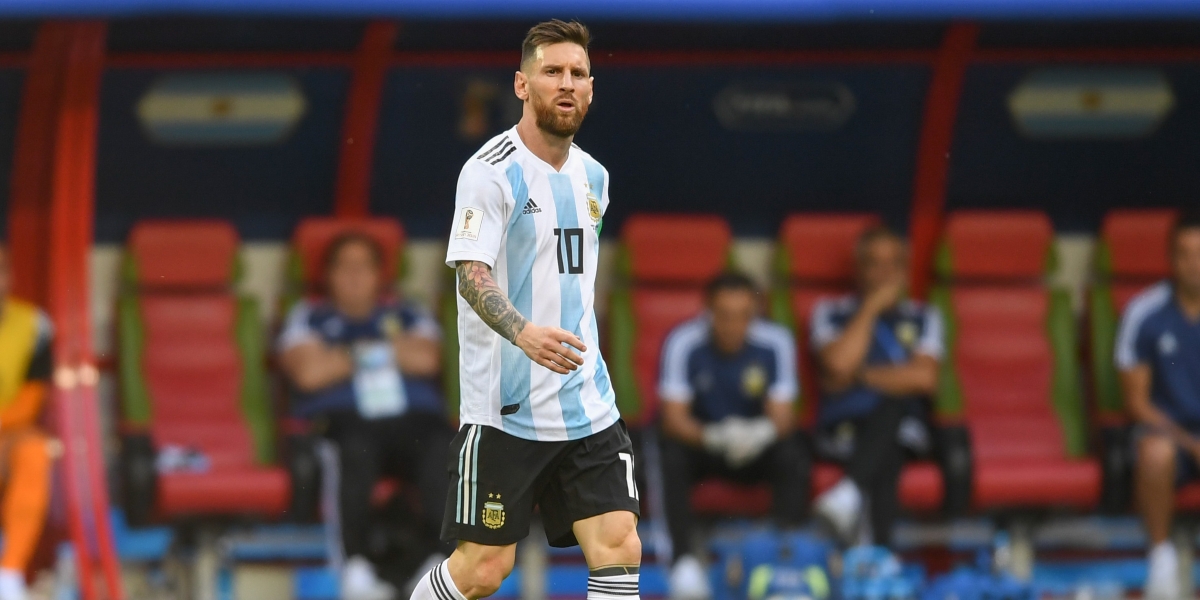
Lionel Messi is no longer the player who spends every minute demanding the ball and dribbling through entire defences.
At 39, he has become something more selective, and perhaps even more calculated.
Argentina’s captain is among the top scorers at the World Cup with seven goals, level with Kylian Mbappé and Erling Haaland, while Harry Kane follows on six. According to Fox Sports, Messi, Mbappé and Haaland are currently locked together at the top of the Golden Boot race.
But Messi’s numbers away from goal tell a different story.
Read also: Aymeric Laporte exposes ugly side of Pep Guardiola relationship
According to talkSPORT, Messi ranked last among 618 outfield players for distance covered per 90 minutes during the group stage, averaging 8.1 kilometres.
DR Sporten’s figures after four matches put the number even lower, at 6.8 kilometres per 90 minutes.
Argentina accept the trade-off
For Argentina, this is not a weakness. It is part of the plan.
Messi is not asked to chase every opponent or press every defender. Instead, Argentina use the rest of the team to protect his energy and make sure he is available when the game opens.
Read also: Manchester City face new panel that could reopen the 115-charge verdict
DR Sporten expert Arnela Muminovic described the logic clearly.
“He should not be involved in everything. He should be correctly positioned in the few moments where the match can be decided,” she said.
She added that Messi’s kilometres are “extremely valuable”, because he spends much of the match walking, scanning the pitch and identifying where opponents are vulnerable.
That is the key to the late-career version of Messi.
Read also: UK Tax-service (HMRC) is coming after Manchester City now
He runs less, but he sees more.
Cape Verde forced him to suffer
There have still been moments where Argentina have needed Messi to empty the tank.
The clearest example came against Cape Verde in the round of 32, where Argentina were pushed into extra time before surviving a dramatic 3-2 scare.
According to Sky Sports, Messi scored the opening goal before an own goal in extra time finally carried the defending champions into the round of 16.
Read also: The huge job Jose Mourinho rejected for Real Madrid – and why it could already haunt him
DR Sporten reported that Messi covered 8.8 kilometres in that match, his highest running total of the tournament so far.
Even then, his value was not found in constant movement. It was found in timing, finishing, set pieces and the ability to appear in the one area where Argentina needed him most.
Scaloni protects his captain
Lionel Scaloni knows exactly what Argentina have in Messi.
The national coach has built a team that can carry the physical work around him, with midfielders and forwards covering ground, pressing opponents and creating the space Messi needs.
Read also: 10 things the commission found Manchester City guilty of
That support allows Messi to stay decisive without trying to play like he did at 25.
His first touch, passing, finishing and reading of space remain elite. His acceleration over short distances is still sharp enough to hurt defenders. His mind is still quicker than most opponents’ legs.
Scaloni has made it clear that he has no concerns about his captain’s condition.
“I think Leo is fine. He played 120 minutes without complaining, and he is 39 years old. He will play no matter what,” he said.
Egypt wait in the round of 16
Argentina’s next test is Egypt, with Messi set for a high-profile meeting with Mohamed Salah.
According to The Guardian, Egypt are approaching the match with belief after their historic penalty shootout victory over Australia, while Argentina arrive after being pushed hard by Cape Verde.
That makes Messi’s economy even more important.
At this stage of a World Cup, Argentina do not need him to cover the most ground. They need him to decide the right moments.
For two decades, Messi has been defined by what he does with the ball.
At 39, he is also being defined by what he does without wasting a step.