England consider their options
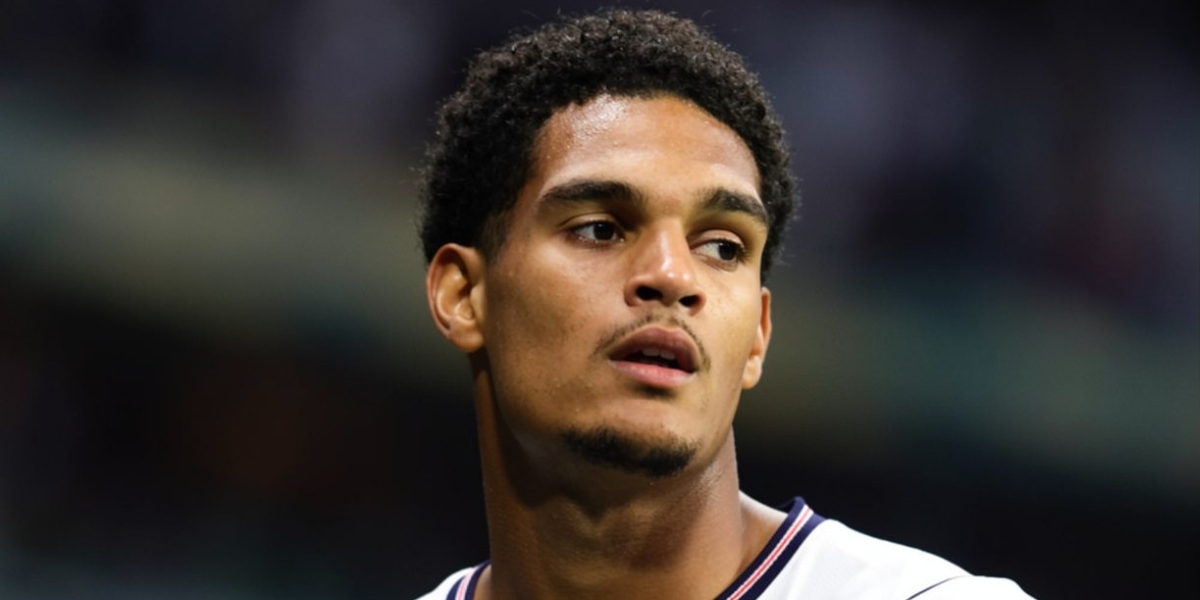
England are weighing up whether to challenge the red card shown to Jarell Quansah during their dramatic World Cup win over Mexico.
The defender was sent off in the 54th minute of England’s 3-2 round-of-16 victory at Estadio Azteca after a high challenge on Jesús Gallardo. The decision left Thomas Tuchel’s side to protect their lead with 10 men before eventually securing a place in the quarter-finals.
According to The Sun, the Football Association is considering its options, with Quansah currently facing the automatic one-match suspension that follows a red card at the World Cup.
That ban would rule him out of Saturday’s quarter-final against Norway.
Read also: Kylian Mbappe had just hit top form – now Real Madrid have a problem
A problem position for Tuchel
Quansah’s possible absence is particularly damaging because of England’s problems at right-back.
Tino Livramento has already withdrawn from the tournament, while Reece James has missed England’s last three matches. Djed Spence is the only other natural right-back in the squad, leaving Tuchel with limited options for one of the biggest games of England’s campaign.
According to Sky Sports, England overcame hostility, altitude and Quansah’s dismissal to beat Mexico and set up a quarter-final meeting with Norway.
That victory came at a cost.
Read also: Premier League boss breaks silence with damning Manchester City statement
Quansah’s challenge was punished after VAR involvement, and while his foot was high, there is a view that his leg may have bounced off the top of the ball before making contact with Gallardo.
The Balogun case changes the backdrop
Normally, England would have little room to move.
A straight red card at the World Cup carries an automatic suspension for the next match, and appeals against refereeing decisions are heavily restricted.
But the Folarin Balogun case has changed the mood around FIFA’s disciplinary process.
Read also: Kasper Schmeichel finds completely new path after football retirement
According to The Guardian, FIFA has made clear that Balogun’s red card was not overturned. Instead, the governing body upheld the one-game suspension but suspended its implementation for a one-year probationary period.
That distinction matters.
Balogun was still sent off for the United States against Bosnia and Herzegovina. What changed was that FIFA delayed the punishment, allowing him to play against Belgium.
FIFA points to Article 27
FIFA has defended the Balogun decision by pointing to its own disciplinary code.
Read also: Andy Murray reveals one major regret about Nadal and Djokovic
According to FIFA’s official statement, the Disciplinary Committee acted under Article 27 of the FIFA Disciplinary Code, which allows the implementation of a disciplinary measure to be suspended under certain conditions.
FIFA said the decision was based on the specific circumstances of the incident and the available evidence.
That explanation has not ended the criticism. UEFA described the Balogun ruling as unprecedented and unjustifiable, while several European federations have questioned whether FIFA is applying its rules consistently.
For England, that is now the central question.
Read also: Manchester United told to ‘nick’ two Man City stars if relegation hits
If FIFA could delay Balogun’s automatic ban, the FA may ask why Quansah’s case should not be examined in the same way.
Political pressure adds to scrutiny
The comparison is made even more sensitive by Donald Trump’s involvement in the Balogun case.
According to AP, the U.S. president confirmed that he called FIFA president Gianni Infantino and asked for Balogun’s red card to be reviewed.
FIFA insists its judicial bodies acted independently, and Infantino has said the case was already being handled through the proper disciplinary process.
Still, the timing of the decision has made the episode difficult for FIFA to contain.
England’s situation is different. There is no suggestion of political intervention. But the Balogun case has created a precedent that other nations were always likely to notice.
FIFA faces a consistency test
England have not yet confirmed a formal appeal.
But the fact that the FA is even considering its options shows how much the Balogun ruling has changed the atmosphere around World Cup disciplinary decisions.
Quansah may still miss the Norway match. FIFA may decide there is no basis to suspend his ban. But the governing body now faces a harder task than simply applying the rulebook.
It must also explain why one red-card suspension can be delayed and another cannot.
After Balogun, every similar case is no longer just about one tackle. It is about whether football’s rules are being applied equally.