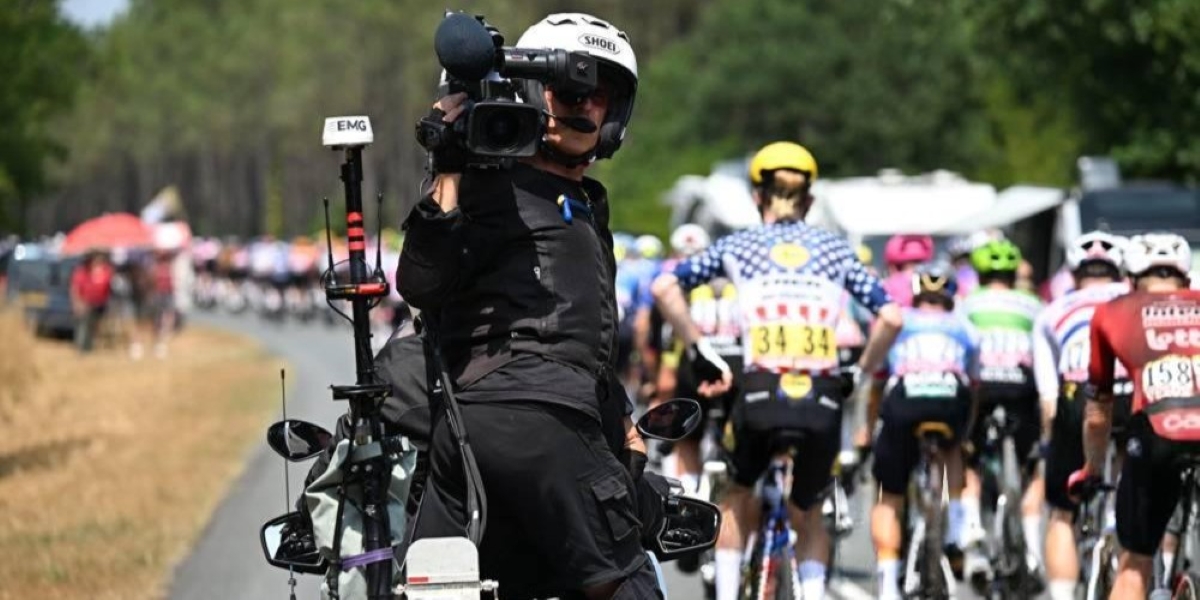
Motorcycle positioning became a major talking point during Stage 16 of the Tour de France after television analysts claimed that several riders received an unintended slipstream advantage.
The controversy arose during the 26.1-kilometre individual time trial from Évian-les-Bains to Thonon-les-Bains. Remco Evenepoel won the stage in 32 minutes and 19 seconds, beating Tadej Pogačar by 28 seconds, according to The Guardian’s live report from Stage 16.
Hamilton identifies a familiar problem
Tyler Hamilton, who competed in the Tour de France eight times and now works as an expert for TV 2 Sport, said several of the early starters had motorcycles travelling too close in front of them.
A motorcycle can reduce the air resistance faced by a following rider, allowing them to maintain a higher speed for the same physical effort. Even when the gap appears substantial to viewers, the aerodynamic benefit can still be significant.
Read also: Abu Dhabi United Group financed them for years
“I noticed that some of the riders who went out earliest on the route had a motorcycle close to them,” Hamilton said during TV 2’s coverage.
He stressed that the riders were not responsible for the positioning of the vehicles.
“Fortunately, it didn’t have a decisive impact on the result, but some riders got free shelter,” Hamilton added.
Tarling ride prompts criticism
Josh Tarling’s ride attracted particular attention. On a descending section, a police motorcycle remained close in front of the Netcompany-Ineos rider, apparently struggling to increase the distance after crossing a speed bump.
Read also: Dana White on ownership of new Las Vegas NBA Team: “YES”
TV 2’s analysts noted that Tarling recorded the fastest time on the relevant section, although the available timing data cannot establish how much, if anything, he gained from the motorcycle.
Emil Vinjebo described the situation as unacceptable and argued that the motorcycle should have accelerated away immediately. Former professional Lars Bak was equally critical, calling it “pure motor pacing”.
Both made clear that Tarling had done nothing wrong. A rider completing a time trial is expected to follow the course and maintain the fastest possible pace; responsibility for creating sufficient distance lies with the motorcycle driver and race officials.
Tarling initially set the fastest overall time of 34 minutes and 21 seconds. As described by Cycling Weekly, the 22-year-old eventually finished tenth, two minutes and two seconds behind Evenepoel.
Read also: Aymeric Laporte exposes ugly side of Pep Guardiola relationship
Calls for better training
Hamilton acknowledged that motorcycles perform essential duties during major races, including policing the route, carrying television cameras and transporting officials. However, he argued that drivers need better training to understand how their position can affect the competition.
The UCI’s guidelines for vehicles in race convoys were introduced with both safety and sporting fairness in mind. Hamilton nevertheless believes that closer attention is required during time trials, where every second matters and riders are separated from one another.
The incidents did not alter the identity of the stage winner, but they revived a long-standing concern in professional cycling: race vehicles must document and protect the competition without influencing it.
Read also: Manchester City face new panel that could reopen the 115-charge verdict