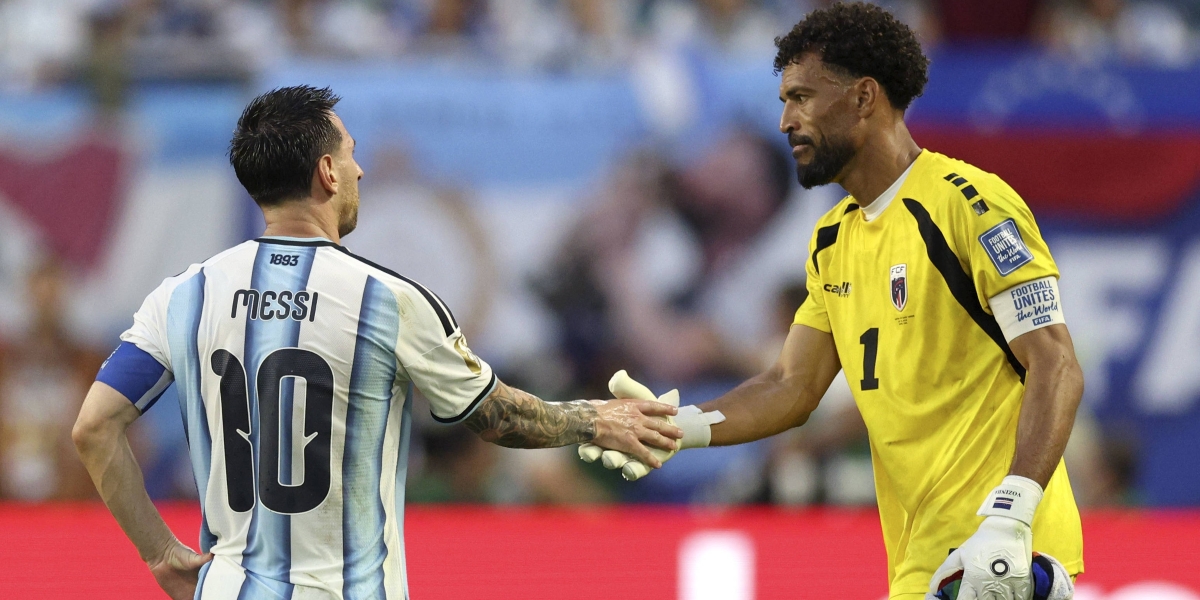
The name Vozinha travelled around the world during Cape Verde’s historic first appearance at the World Cup. It belonged to the goalkeeper who frustrated Spain, stood firm against Argentina and was later selected by supporters in FIFA’s team of the tournament.
His new supporters in Chile may not see that name when he finally walks onto the pitch for Colo-Colo. The regulations governing the Chilean top division explicitly prohibit nicknames on the backs of shirts.
Unless an exception is approved, the player known almost universally as Vozinha will instead have to use Évora, Dias or a combination of his legal surnames. It would be an unusual end to a summer in which his nickname became one of football’s most valuable personal brands.
The rule leaves little room for interpretation
According to Article 36 of the ANFP’s official regulations for the 2026 season, players must display their paternal surname, maternal surname or both on the upper back of the shirt. An initial from the player’s first name may also be added.
The regulations then state directly that nicknames, aliases and sobriquets are not permitted. A breach can result in an administrative yellow card for the player and a fine of up to 20 inflation-linked units for the club.
For most players, the rule is a minor matter of identification. For Vozinha, it affects the name under which he has played throughout his international career and built a following of almost 30 million people.
Colo-Colo would therefore need the Chilean authorities to approve an exception or amend the rules. Until that happens, the World Cup’s most famous goalkeeper nickname cannot automatically be printed on his new club shirt.
The nickname belongs to his grandmother
Vozinha’s full name is Josimar José Évora Dias. The nickname does not mean “little voice”, as some international reports have incorrectly suggested.
Read also: European nations consider World Cup boycott over FIFA commercialization plan
As explained by FIFA in its feature on the story behind his name, it emerged because he was raised by his grandparents while his father completed military service and his mother worked long hours.
When Vozinha played street football against older boys, he was frequently knocked down and returned home frustrated. His friends teased him for running back to his grandmother, or “vózinha”, a diminutive Portuguese expression for grandmother.
The name followed him when he left Cape Verde for Angola. Another goalkeeper at Progresso was already called Josimar, so he decided against becoming “Josimar II” and placed Vozinha on his shirt instead.
His legal name also began with a World Cup
There is another remarkable layer to the story. Vozinha’s father originally wanted to name him Jorge Valdano after the Argentine forward who helped defeat West Germany in the 1986 World Cup final.
Read also: Was leaving Lautaro Martínez on the bench Scaloni’s worst ever mistake?
The Cape Verdean official responsible for registering the child reportedly refused to approve the foreign name. His father then chose Josimar, inspired by the Brazilian defender who scored two spectacular goals during the same tournament.
One authority therefore prevented him from receiving his father’s preferred football name at birth. Forty years later, another set of regulations may prevent him from using the football name by which the world now knows him.
That coincidence turns a relatively minor shirt rule into a story about identity. Vozinha is not simply a marketing label created after his World Cup breakthrough, but a name tied to his childhood, grandparents and entire professional career.
Seven saves changed his life
Vozinha entered the World Cup without a club after leaving Portuguese second-tier side Chaves. He was 40 years old and had spent most of his career outside Europe’s most prominent leagues.
Everything changed in Cape Verde’s opening match against Spain. The veteran made seven saves as the tournament debutants held the eventual world champions to a goalless draw.
Cape Verde also drew with Uruguay and Saudi Arabia before taking Argentina into extra time in the round of 32. Vozinha completed the competition with 18 saves and two clean sheets from four appearances.
According to FIFA’s official World Cup Dream XI, he received 39.6 per cent of the goalkeeper vote. He was selected alongside Jude Bellingham, Lionel Messi, Erling Haaland and Kylian Mbappé.
Colo-Colo moved before anyone else
The World Cup transformed Vozinha from an unattached veteran into one of the most discussed goalkeepers on the market. Clubs from several countries were linked with him, but Colo-Colo reached an agreement with his representatives.
Read also: Holger Rune's mother makes major revelation to Danish media: "He's a completely different Holger"
According to Sebastián Dote in El País Chile’s report on the transfer, club president Aníbal Mosa confirmed that the parties had agreed terms. The move remains subject to medical tests and the completion of the formal contract.
The Chilean club offers Vozinha a chance to compete for a domestic championship at the end of an unlikely career. It also gains one of the most marketable personalities created by the World Cup.
That commercial opportunity makes the shirt-name dispute more than a curiosity. Colo-Colo have recruited Vozinha, but the regulations may initially force them to sell shirts carrying the name Dias.
One final save is required
There is nothing in the rule that prevents Colo-Colo from calling the goalkeeper Vozinha in announcements, advertising or social-media posts. The restriction concerns the official identification printed on his match shirt.
A special solution may still be found before his competitive debut. Chilean football has an obvious commercial interest in allowing one of its newest international stars to use the name recognised by supporters around the world.
Until then, Vozinha faces a battle that cannot be settled with his gloves. After stopping the champions of Europe and carrying Cape Verde into the knockout stage, he must now save his own name.


