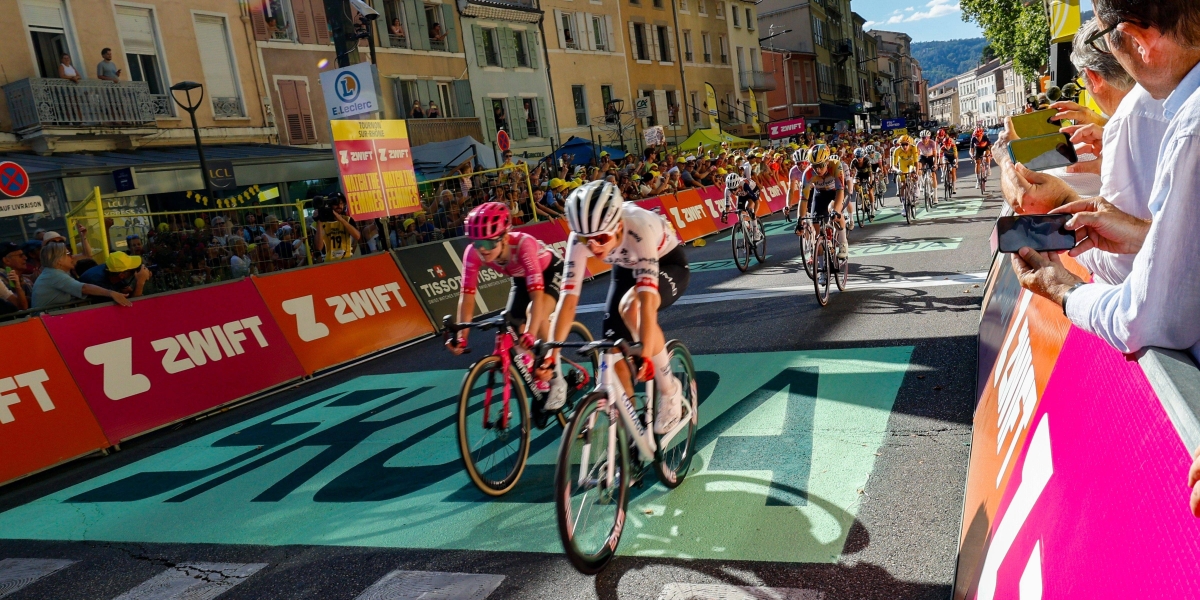
At the top of women’s professional cycling, the money is finally moving. Among 42 WorldTour riders who answered The Cyclists’ Alliance’s 2026 survey, 43% earned more than €100,000 last season, up from roughly 27% a year earlier. Two reported earnings in the €400,000-500,000 band.
Beneath that tier, the picture is different. Of the 52 Continental racers who filled in the same survey, 75% received no salary from their team, and 96% earned €20,000 or less. Nearly half worked a second job to stay in the sport.
The Cyclists’ Alliance, the riders’ union in women’s cycling, published its State of the Women’s Professional Peloton 2026 report on 30 October. It is based on 127 responses across six disciplines and is the ninth edition of the organization’s annual rider survey.
A one-year contract trap
The pay gap drives a structural one. At Continental level, 79% of riders are on single-year contracts; at WorldTeam level, 90% hold deals running longer than two years. More than half of Continental respondents signed their contracts without any legal advice.
Read also: Raphinha refuses to discuss Barcelona win after footballer’s tragic death
The consequences follow them home. Fifty-four percent reported medical or physiotherapy expenses that their team did not reimburse, compared with 19% at WorldTeam level. A similar share also had travel costs that were never covered.
The Alliance’s legal and ethics officer, Judith van Maanen, told Velora Cycling what the gap between the two tiers actually looks like on paper.
“A contract is about more than salary. Riders need to know what protection they have; and where the gaps are; if they face injury, pregnancy, illness or a change in their team’s plans.”
Career impact is explicit: 73% of Continental respondents cited financial insecurity as a reason to consider leaving the sport earlier than planned.
Read also: Antonio Nusa reveals unusual plan for Erling Haaland ahead of Champions League clash Kopiér
Healthcare reaches only part of the peloton
The medical data exposes how little the UCI’s current rulebook requires of lower-tier teams. Only 17% of Continental respondents said they had access to regular medical screening. That is standard practice at 90% of WorldTeams.
Education on Relative Energy Deficiency in Sport, a condition that disproportionately affects female endurance athletes, reached 71% of WorldTeam riders but only 21% at Continental level.
The UCI’s frozen floor
The disparity sits on top of a UCI minimum-wage structure that is not keeping pace. For 2026 the governing body froze the Women’s WorldTeam minimum at €44,150 for veterans and €35,721 for neo-pros, matching the 2025 levels. The new Women’s ProTeams second division received a modest bump to €22,000. At Continental level, no mandatory minimum applies.
Six demands for the UCI
The report hands the UCI a six-point reform agenda, led by financial security: enforce stronger contract protection for Continental teams, cover essential racing costs, and spell out how development funding actually reaches riders. Race safety, health and welfare, safeguarding, development pathways and broadcast visibility complete the list.
Read also: Infantino’s third scandal in weeks puts a Trump adviser in the frame
On safety, 71% of all respondents flagged dangerous rider behavior, 68% poor road surfaces, 65% road furniture and 62% unsafe final kilometers. Among riders aged 19 to 22, 41% said there were not enough suitable development races.
Jazilla Mwamikazi, a rider at the World Cycling Centre Team, described to Velora Cycling what a two-year deal means at Continental level.
“I was on a one-year contract this season, and from the start I did not know what next year would look like. Being offered a two-year contract was a total surprise. Only now do I realise how much it means to me: I can really focus on building as a rider, rather than having to prove myself at every race. I know many riders at Continental level feel the same.”
The Alliance is asking the UCI to rewrite its model contract so teams must verify they can meet basic commitments before being licensed. The UCI has not publicly responded to the six-point agenda, and no mandatory minimum wage applies to the Continental tier where three quarters of surveyed riders earned nothing from their teams this year.
Read also: Russia’s World Championship comeback could come at Ukraine’s expense
Read also: Tsonga, Simon and Gasquet bid farewell as Paris gives Monfils his send-off at the Masters