A red card becomes a political story
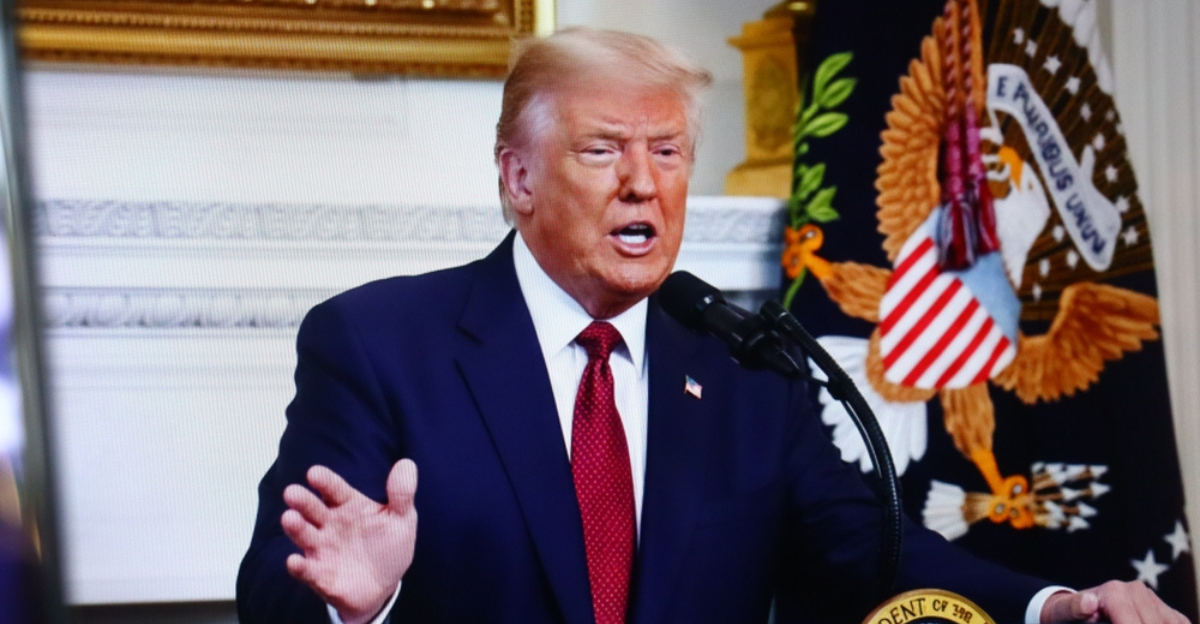
Donald Trump has found himself at the centre of one of the strangest controversies of the World Cup, after confirming that he asked FIFA president Gianni Infantino to review Folarin Balogun’s red card suspension.
Balogun was sent off during the United States’ 2-0 win over Bosnia and Herzegovina in the round of 32. Brazilian referee Raphael Claus initially allowed play to continue, but showed the American striker a straight red card after a VAR review.
The decision normally carried an automatic one-match suspension, which would have ruled Balogun out of the last-16 match against Belgium.
According to AP, FIFA later suspended the implementation of that punishment for a one-year probationary period, allowing Balogun to play.
Read also: Kylian Mbappe had just hit top form – now Real Madrid have a problem
Trump asked Infantino for a review
Trump has said he did not order FIFA to change the decision, but did ask for the case to be looked at again.
According to The Sun, Trump told reporters: “All I did, I asked for a review because I didn’t think it was a foul.”
He added: “I thought it was two great athletes who crashed into each other and got entangled.”
The president also admitted that he had not initially understood the consequence of a red card.
Read also: Premier League boss breaks silence with damning Manchester City statement
“He gave him a red card, I didn’t know what that meant,” Trump said. “Then I started hearing that means he can’t play in the next game.”
FIFA relies on disciplinary code
FIFA’s decision did not erase the incident from the match. Balogun was still sent off against Bosnia and Herzegovina, and the United States still had to finish that game with 10 men.
What changed was the punishment attached to the red card.
According to AP, FIFA used Article 27 of its disciplinary rules, which allows a judicial body to fully or partly suspend the implementation of a disciplinary measure and place the player under a probationary period.
Read also: Kasper Schmeichel finds completely new path after football retirement
That technical distinction matters. The case should not be described simply as FIFA “annulling” the red card. The more accurate wording is that FIFA suspended Balogun’s automatic one-match ban.
Infantino says process was independent
The controversy deepened because of Trump’s direct contact with Infantino.
According to The Guardian, Infantino confirmed that he had received a call from Trump, but said the matter was already before FIFA’s independent judicial bodies.
Infantino said those bodies operate autonomously, apply the FIFA Disciplinary Code and make decisions based on the relevant regulations and facts.
Read also: Andy Murray reveals one major regret about Nadal and Djokovic
That is also FIFA’s public position: Trump asked for a review, but the governing body says the final decision came from its disciplinary process.
Belgium angered by ruling
The decision caused anger in Europe, especially in Belgium.
Belgium challenged Balogun’s eligibility before the match, but FIFA rejected the appeal because the Belgian federation was not considered a party to the original disciplinary case.
UEFA also criticised the decision, calling it unprecedented and unjustifiable.
Read also: Manchester United told to ‘nick’ two Man City stars if relegation hits
The dispute did not help the United States on the pitch. Balogun started against Belgium, but the co-hosts were beaten 4-1 in Seattle and knocked out of the World Cup.
A damaging precedent
The case has left FIFA facing difficult questions.
Balogun’s challenge was controversial, but red-card suspensions are usually treated as automatic. The fact that a player was cleared after the president of a World Cup host nation contacted FIFA has created an uncomfortable appearance of political influence, even if FIFA insists the decision was independent.
Trump celebrated the outcome, while FIFA defended both its process and referee Raphael Claus.
For the United States, the story ended in defeat. For FIFA, the debate may last much longer.