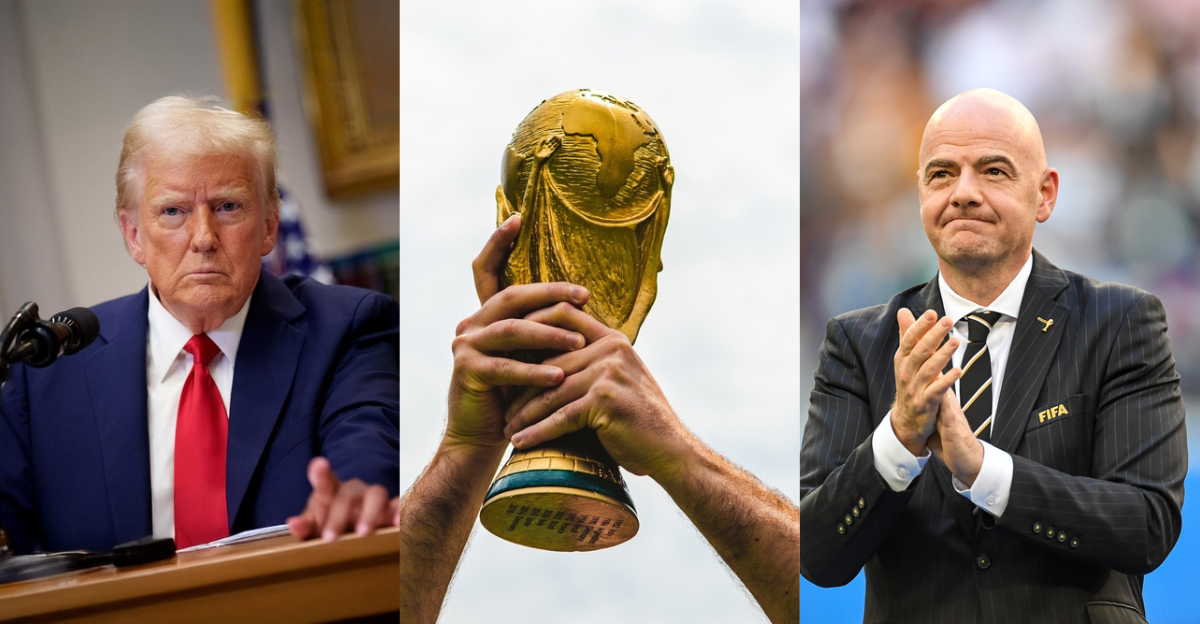
The 2026 FIFA World Cup, co-hosted by the United States, Mexico, and Canada, is projected to become the most lucrative sporting event in history, with FIFA forecasting unprecedented revenues.
However, this financial windfall is overshadowed by growing concerns regarding soaring ticket prices, significant tax liabilities for national associations, and the financial burden placed on host cities.
FIFA anticipates a staggering $13 billion in revenue for its 2022-26 cycle, with nearly $9 billion expected in 2026 alone. This represents a remarkable 73% increase over the $7.5 billion generated during the 2018-2022 cycle. The tournament’s expansion from 32 to 48 teams, boosting the number of matches from 64 to 104, is a key driver behind these projections.
Record financial forecasts and rising costs
The global television rights remain FIFA’s primary revenue generator, with forecast earnings surpassing the $3.4 billion from Qatar 2022 and $3.1 billion from Russia 2018. Ticket sales and hospitality are also set to contribute significantly, projected to reach around $3 billion, a substantial leap from the $950 million earned from matchdays in Qatar.
Read also: Real Madrid's season unravels amidst Mbappé controversy and title loss
Commercial partners and sponsors are expected to bring in a record $2.7 billion, complemented by an additional $670 million from licensing deals.
Despite these record earnings, the cost to attend the tournament is escalating dramatically. The most expensive ticket for the final at MetLife Stadium (renamed New York New Jersey stadium for the World Cup) on July 19 is listed at $10,990, nearly seven times the top price for the 2022 final in Qatar.
Campaign group Football Supporters Europe highlighted that the minimum cost for a disabled fan to follow their team from the first match to the final would be $6,900 for tickets alone, five times more than in Qatar.
FIFA President Gianni Infantino addressed the pricing, telling CNBC last month, “The prices have been fixed, but in the US there is a thing called dynamic pricing which means they can go up as well as down. That’s part of the market we’re in. It’s not a problem as the demand is there.” Indeed, FIFA has received over 500 million applications for the seven million available seats.
Read also: Reitan claims maiden PGA Tour title as Fitzpatrick falters at Quail Hollow
Tax liabilities and host city challenges
A significant point of contention for participating nations is the US federal tax liability. National associations face a 21% tax on their earnings, while individual players are subject to a 37% tax on their income.
This contrasts sharply with Canada and Mexico, the other co-hosts, which have granted tax exemptions to national associations playing in their countries. Oriana Morrison, a tax accountant advising the Brazilian and Portuguese federations, voiced concerns reported by The Guardian:
“A year ago, Fifa was telling everyone that they would have a tax agreement and they would be paying no taxes. In US politics there’s huge resistance to giving tax breaks to sporting organisations… So Fifa and the US tax authorities will be the biggest winners from the World Cup.”
The financial model for host cities also presents challenges. While FIFA retains income from broadcasting, sponsorship, ticket sales, and subsidiary services like parking fees, host cities are charged with covering “safety, security and protection.” This has led to friction, exemplified by New York’s planned Fifa Fan Festival in Liberty State Park being scrapped due to escalating costs.
Read also: Florentino Perez pushes for Jose Mourinho return amid Real Madrid's difficult season
For context, the 1994 World Cup in the US generated a $99.6 million surplus, with 30% going to the hosts and 70% to other federations, and cities like New York, San Francisco, and Boston collectively received $1.045 billion in revenue, according to Wikipedia.
FIFA states it will reinvest at least $11.67 billion of its $13 billion revenues “to boost global football development,” a 20% increase on the current cycle. The 2026 World Cup is projected to be the costliest tournament at $3.8 billion, a figure that includes all operational costs and prize money, which has been increased by 15% to $871 million, guaranteeing each of the 48 participating countries $12.5 million.
Sources: www.theguardian.com, en.wikipedia.org, swissramble.substack.com
Read also: Pep Guardiola: Jeremy Doku will soon be as good as Vinicius Junior and Lamine Yamal
Read also: West Ham's survival hopes plummet to 12% after controversial VAR decision