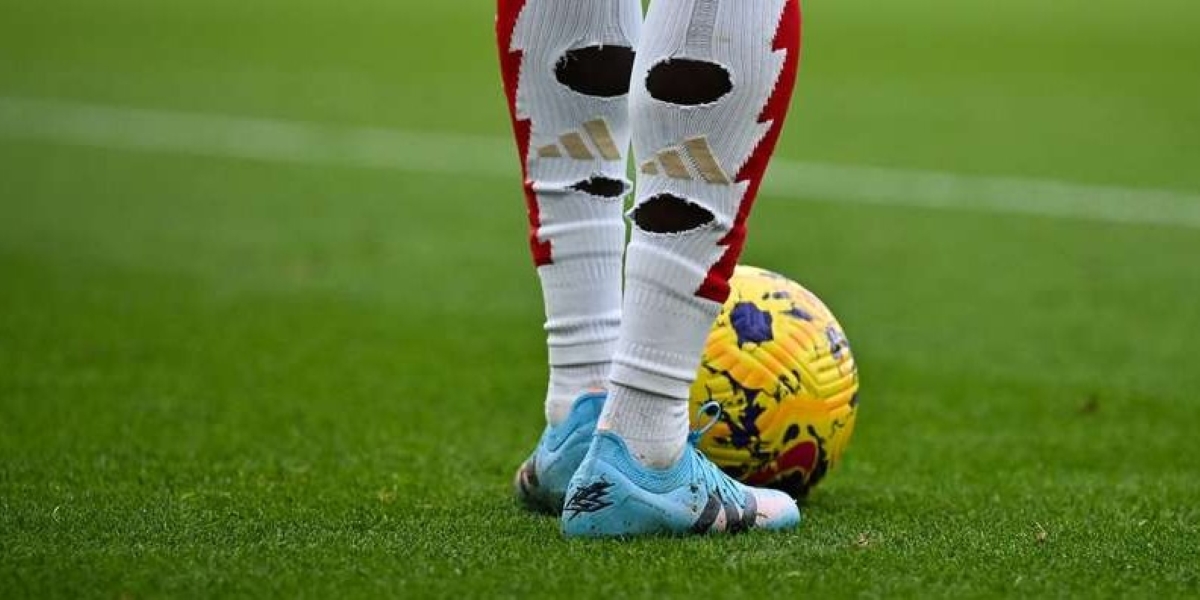
Some of the world’s leading footballers have attracted attention at the World Cup for an unusual modification to their matchday kit.
Players including Jude Bellingham, Bukayo Saka and Kyle Walker have been seen with large holes cut into the backs of their socks, leaving sections of their calves exposed.
The openings may look like accidental tears, but they are made deliberately before matches.
Players who use the modification generally believe that modern football socks feel too restrictive around their calves. Cutting through the material reduces the sensation of tightness and can make the socks feel more comfortable during a match.
Read also: Ferrari issues unusual statement as Christian Horner rumours grow
Tight socks can cause discomfort
According to Kit Roberts’ report for UNILAD, one explanation is that the close-fitting material places uncomfortable pressure on players with particularly muscular calves.
Football socks are designed to remain firmly in place while covering shin pads, but the material can feel increasingly tight as the calf muscles expand during exercise.
By cutting several openings into the fabric, players reduce the tension in the areas where they experience the most discomfort.
The practice is not unique to the World Cup. Footballers have used similar modifications in domestic leagues and European competitions for several years, with Bellingham and Saka among the most recognisable examples.
Read also: Jamie Carragher: ‘always felt’ Man City were guilty
It has nevertheless become more noticeable during the tournament because several high-profile players have appeared with similar cuts.
No proven performance advantage
The holes are often said to improve circulation, prevent cramp or protect the calf muscles, but those claims have not been established scientifically.
As explained by Wired’s Matt Burgess, sports medicine experts have found no convincing evidence that cutting football socks produces a measurable physiological advantage.
Properly fitted compression clothing can help some athletes manage swelling and recovery, meaning that reducing compression is not automatically beneficial.
Read also: Dana White missed Fury vs Joshua’s kickoff
The most likely explanation is therefore much simpler: some players feel more comfortable when the material is loosened.
That perception can still matter in elite sport. Any irritation, numbness or feeling of restriction may become distracting during a match, even when it does not directly affect circulation or muscle performance.
Different from cutting holes in boots
The sock modification should not be confused with another unusual practice seen during the tournament: players cutting sections from the heels of their boots.
That alteration is generally used to reduce rubbing or pressure around the heel and Achilles tendon.
Read also: Leeds will receive huge compensation from Manchester City
Some footballers may make the change because of blisters, inflammation or discomfort associated with Haglund’s deformity, sometimes known as a “pump bump”. However, the presence of a modified boot does not by itself confirm that a player has a particular medical condition.
Cutting holes in socks, by comparison, is usually associated with pressure around the calf rather than the heel.
A matter of personal preference
There is no general football rule preventing players from cutting their socks, provided the equipment remains safe and complies with the required team colours.
The modification is therefore best understood as an individual preference rather than a new scientific breakthrough.
Read also: Huge Super League twist as Real Madrid head back towards old allies
At the highest level, players closely control every element of their preparation, from boots and shin pads to nutrition and recovery. Altering a pair of socks may not provide a proven competitive advantage, but for those who dislike the feeling of tight material around their calves, it can remove one small source of discomfort.
The holes may appear untidy, but they are neither accidental nor evidence that teams have supplied damaged kit. They are simply another example of footballers adapting standard equipment to suit their own bodies.