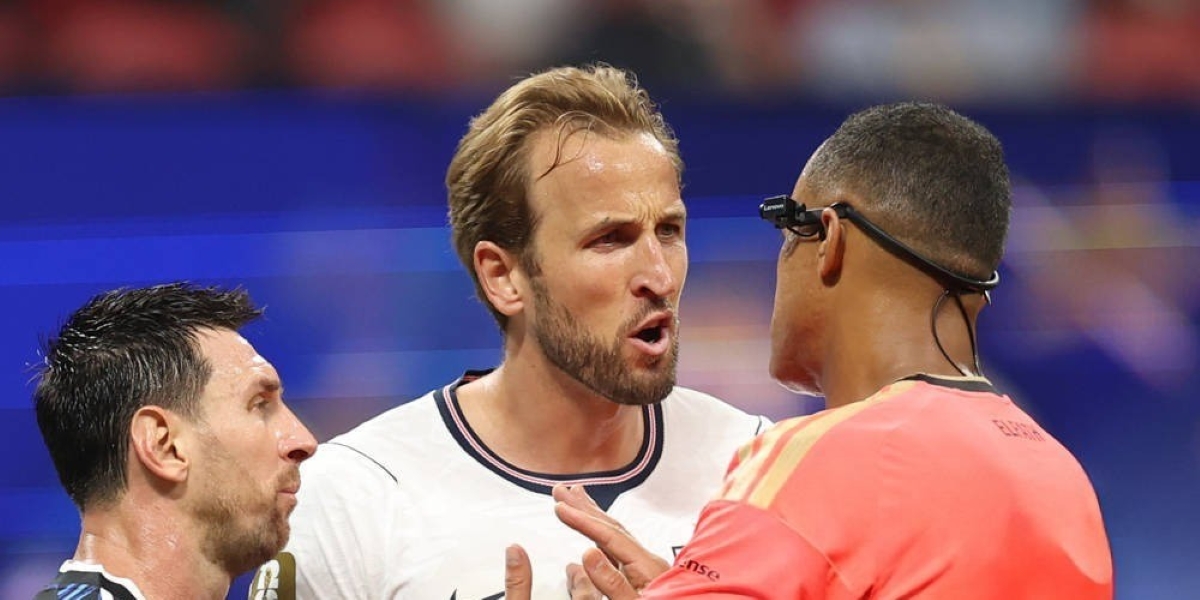
Harry Kane’s attempts to influence referees may be doing England more harm than good, according to former Premier League official Graham Scott.
The England captain was regularly seen speaking to referee Ismail Elfath during the fiercely contested World Cup semi-final against Argentina in Atlanta.
Kane appeared frustrated by several challenges from Argentina players during a physical opening half in which the teams committed 19 fouls. However, Scott argued that the striker’s style of communication was unlikely to win him any sympathy from the official.
According to SPORTbible’s report on Scott’s analysis, the former referee made the observation while contributing to The Athletic’s live coverage of the match.
Read also: Botev Plovdiv president shot in the head after Bulgaria’s Nations League tie
Scott takes aim at Kane’s sarcasm
Scott claimed Kane’s habit of asking sarcastic and deliberately leading questions could quickly become irritating for referees.
“Kane in the referee’s ear as usual,” Scott wrote.
“The England captain is very bad at it though — he just asks sarcastic leading questions.
“It often has the opposite effect because the ref just gets fed up with him.”
Read also: Gyokeres says bloody socks is normal procedure
The criticism offers a different perspective on Kane’s role as England captain. While speaking to the referee is an accepted part of his responsibilities, Scott believes the manner of those conversations is crucial.
A captain who calmly asks for clarification may establish a useful relationship with the official. Repeated complaints or sarcastic questions, however, risk making the referee less receptive as the game develops.
There is no evidence that Kane’s conversations directly affected any individual decision during the semi-final. Scott’s argument was instead that the striker’s general approach may reduce his influence when England genuinely need the referee to listen.
Physical opening tests referee
Elfath faced a difficult task from the opening minutes as both teams attempted to impose themselves physically.
Read also: John Stones has been convicted: “Nothing to say”
The referee briefly stopped play early in the match in an effort to calm the players after a succession of hard challenges and confrontations. By half-time, England and Argentina had combined for 19 fouls, two yellow cards and no shots on target.
Elliot Anderson was booked in the 38th minute for a challenge on Lionel Messi. Lisandro Martínez followed four minutes later after pulling back Morgan Rogers to prevent an England counterattack.
The Associated Press described the first half as rugged and emotionally charged, with Elfath repeatedly required to intervene as players from both teams clashed.
England were particularly frustrated that Enzo Fernández avoided an early caution despite committing several fouls. Kane’s conversations with Elfath appeared to reflect a wider belief within the England team that Argentina were being allowed to disrupt the match too easily.
Read also: Enzo Maresca breaks silence after Man City guilty verdict with cryptic message
Scott nevertheless suggested Kane was choosing the wrong method to make that case.
Captains walk a difficult line
The incident has renewed discussion over how captains should communicate with officials during high-pressure matches.
Kane is one of England’s most experienced players and has regularly spoken to referees throughout his international career. His status allows him greater access to officials than most of his teammates, but it does not give him unlimited freedom to challenge every decision.
Sarcasm can be particularly ineffective because it places the referee in a defensive position. Rather than encouraging an explanation, a leading question can sound like an accusation that the official has already made a mistake.
Read also: Guardiola stands by City after guilty verdict: ‘we will get through this together’
Scott’s comments suggest captains could benefit from treating communication with referees as a specific skill rather than simply an opportunity to complain.
The referee must also maintain authority. Allowing one player to dominate every conversation risks encouraging further protests from both teams and making an already difficult match harder to control.
Kane unable to influence the outcome
England eventually moved ahead through Anthony Gordon in the 55th minute, but the advantage disappeared during a dramatic closing period.
Fernández equalised in the 85th minute before Lautaro Martínez headed home Lionel Messi’s cross two minutes into stoppage time. The comeback secured a 2-1 victory and sent Argentina into the final against Spain.
Kane later admitted England had become too focused on protecting their lead.
“Once we went 1-0 up we seemed to just try and hold on which at this level is just not enough,” he said, as quoted by Sky Sports after the defeat.
The England captain finished the tournament with six goals, but he was unable to make a decisive attacking contribution against Argentina. His most visible first-half involvement instead came through his repeated exchanges with Elfath.
Scott’s verdict was blunt: Kane was trying to influence the referee, but his sarcasm may have achieved exactly the opposite.