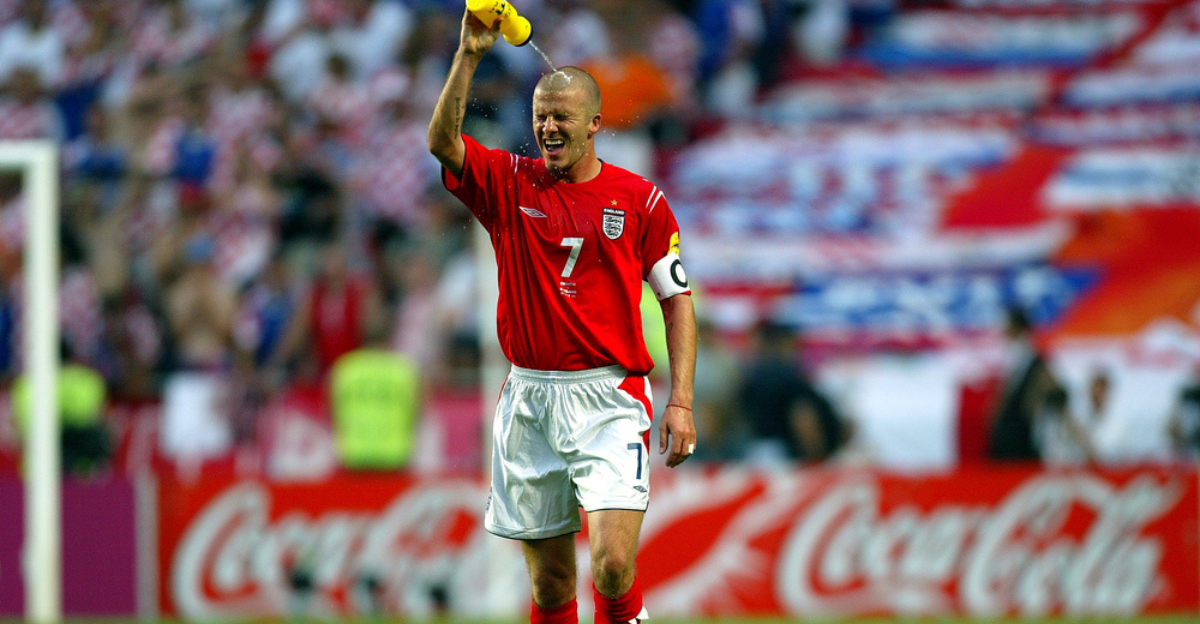
In 2006, England arrived at the FIFA World Cup in Germany burdened by a moniker that promised so much: the “golden generation.” A squad brimming with Premier League and Champions League winners, captained by David Beckham, and featuring talents like Wayne Rooney, Frank Lampard, and Steven Gerrard, was widely tipped to end England’s then 40-year wait for a major trophy since the 1966 World Cup. Yet, as a new BBC documentary, “The Golden Generation,” explores, a confluence of external distractions, internal divisions, and unfortunate injuries conspired to derail their ambitions, culminating in another heartbreaking quarter-final exit.
The weight of expectation and a star-studded squad
The “golden generation” tag was first coined in 2001 by then-Football Association chief executive Adam Crozier, following England’s emphatic 5-1 away victory over Germany in a World Cup qualifier. By 2006, the squad boasted an enviable array of talent:
- David Beckham (31): Real Madrid, 6x Premier League, 1x Champions League
- Frank Lampard (27): Chelsea, 2x Premier League
- Steven Gerrard (26): Liverpool, 1x Champions League
- Rio Ferdinand (27): Manchester United, 1x Premier League
- Wayne Rooney (20): Manchester United
- Michael Owen (26): Newcastle, Ballon d’Or 2001
Manager Sven-Goran Eriksson, England’s first foreign coach, publicly declared before the tournament, “I think we will win it this time,” a sentiment that reflected the national mood. However, even the squad selection raised eyebrows, with 17-year-old Theo Walcott, who had not yet played for Arsenal, chosen over established Tottenham striker Jermain Defoe. Steve McClaren, Eriksson’s assistant, recalled the difficulty of balancing such a wealth of talent: “How do you leave out Gerrard, Lampard, [Wayne] Rooney, [David] Beckham? That was the difficulty.”
Distractions and managerial turmoil
The tournament itself was overshadowed by a media frenzy that went beyond the pitch. England’s team base in Germany was a secluded five-star hotel in the Black Forest, but the wives and girlfriends (WAGs) were housed in Baden-Baden, sharing a hotel with many journalists. This created an unprecedented level of celebrity culture around the team, with showbiz reporter Clemmie Moodie describing her brief as “ignore the football” and “watch these WAGs, see what they get up to.” Rio Ferdinand lamented the impact, stating, “Baden-Baden was a shambles. It was a circus act. The media, the paparazzi. They don’t want us to win… why are they coming and just ruining our time with our families?”
Read also: Tragedy strikes Belgian youth tournament as seven-year-old dies after bouncy castle accident
Adding to the chaotic atmosphere was the precarious position of Eriksson. Six months before the World Cup, a News of the World ‘fake sheikh’ sting operation saw the manager recorded discussing sensitive team and transfer information. This, coupled with other controversies, led Eriksson to announce in January 2006 that he would resign after the tournament, casting a shadow over the campaign.
Internal rifts and critical injuries
Beyond the external noise, internal issues plagued the squad. Rio Ferdinand candidly revealed the underlying tensions: “I honestly believe the disharmony – the rivalries – definitely played a big part in taking us out of the running to win.” He described “fake relationships” within the squad, particularly between players from rival Premier League clubs, where professional competition spilled over into the national team environment. Wayne Rooney, however, offered a contrasting view, stating, “I loved it, I loved playing for England. I loved meeting up and speaking to every player. I didn’t see it. I didn’t feel there was rivalries between different players.”
Crucially, injuries to key players significantly hampered England’s chances. Six weeks before the opening match, Wayne Rooney fractured his fourth metatarsal playing for Manchester United, and also concealed a groin injury. Despite his determination to play, he failed to score a single goal in the tournament. During the group stage, Michael Owen suffered a severe knee injury against Sweden, ending his World Cup prematurely.
England navigated their group with wins over Paraguay (1-0) and Trinidad and Tobago (2-0), and a 2-2 draw with Sweden, before beating Ecuador 1-0 in the last 16 thanks to a David Beckham free-kick. Their journey ended in the quarter-finals against Portugal, a repeat of their Euro 2004 exit. Beckham left the match injured before half-time, and Rooney was controversially sent off in the 62nd minute. After a 0-0 draw, England lost the penalty shootout 3-1, with Frank Lampard, Steven Gerrard, and Jamie Carragher all missing their spot-kicks.
Read also: USMNT in crisis! Star player needs surgery weeks before World Cup
The defeat marked England’s third consecutive quarter-final exit at a major tournament. Beckham resigned as captain, and Steve McClaren took over as manager, only for England to then fail to qualify for Euro 2008. Reflecting on the unfulfilled promise, Wayne Rooney concluded, “Whether you call us a golden generation or whatever you want to call us, we were a group of men trying to be successful for our country. And ultimately fell short.”
Sources: www.bbc.com
Read also: Arsenal’s rise under Arteta revealed in new Premier League table